 how-to
Can You Put a Balloon Arch Outside Safely?
Last Updated: November 4, 2026
Quick Summary
Yes, you can put a balloon arch outside, but it needs more planning than an indoor display. Choose a flat, sheltered spot that is partly shaded, anchor the frame against wind, and check conditions before guests arrive.
- Pick flat, sheltered ground that is partly shaded to limit wind and heat damage.
- Confirm you have permission to use the site, especially for public parks and council land.
- Add at least two sandbags per leg on soft ground, with more on the windward side.
- Secure the frame before adding balloons, then check all connections after the first gust.
- Inflate on the day of the event, not the day before, to keep balloons looking fresh.
Table of Contents
- Can You Put a Balloon Arch Outside? What to Expect
- Choosing the Right Spot: Shade, Sun and Ground Conditions
- How to Secure a Balloon Arch Outdoors Against Wind
- Outdoor Balloon Arch Stand Options: Materials and Installation
- How Long Does a Balloon Arch Last Outside?
- Outdoor Balloon Arch Ideas for Weddings, Parties and Corporate Events
- Booking Your Outdoor Balloon Arch With Essex Light Up Numbers
- Frequently Asked Questions
Can You Put a Balloon Arch Outside? What to Expect
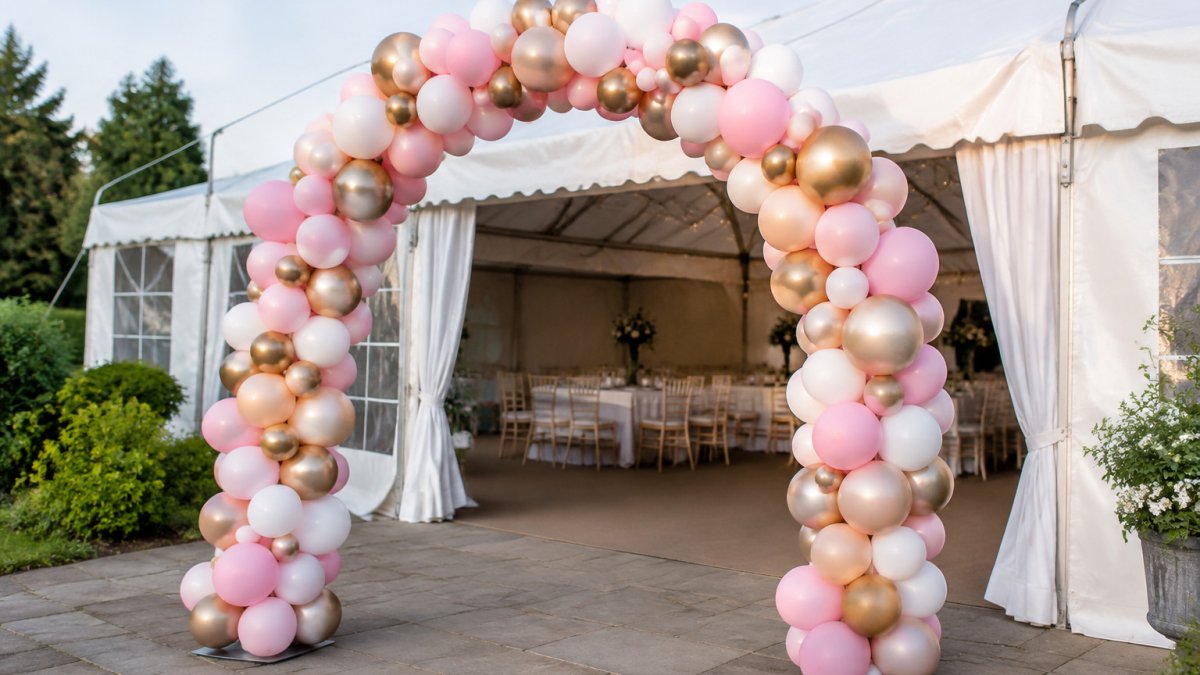
Yes, you can put a balloon arch outside, but it takes more planning than an indoor display. Essex Light Up Numbers provides balloon arches for garden parties, weddings and milestone birthdays, and the key is preparing for weather and ground conditions before the balloons go up. Wind is the main threat, followed by sun and heat.
Outdoor arches face conditions that indoor ones never see. Breezes push against the balloons, direct sun heats the latex, and uneven ground can throw off the frame. Plan for each of these before you start.
Most outdoor failures come from one of three things: a base that isn't weighted enough, an arch placed in full sun for hours, or a frame that wasn't checked before guests arrived. Each of these is easy to prevent.
Choosing the Right Spot: Shade, Sun and Ground Conditions
The best spot is flat, sheltered and partly shaded. A position under a tree or next to a wall cuts wind gusts, and shade keeps the balloons from heating up and popping. Avoid open fields and sites beside car parks where wind funnels between buildings.
Check the ground before you set up. A soft lawn lets stakes and bases sink, while concrete or paving gives you a firm surface for weights. Look for:
- Level ground, or a surface you can level with a spirit level
- Shelter from prevailing wind
- Shade for at least part of the day
- Clear space for guests to walk around the arch
Watch out: Setting up in direct midday sun can soften latex and cause balloons to sag or pop, so schedule the install for early morning or late afternoon where you can.
Permissions, Public Spaces and Landowner Consent
Before you fix on a spot, confirm you are allowed to use it. This is the step most online guides skip, and it is the one most likely to derail an event at short notice.
- Private gardens: You generally need the homeowner's permission, and if you are a professional installer, check that your public liability insurance covers the address.
- Public parks and open spaces: Many local authorities require a permit or a temporary event notice for structures, and some prohibit staking into grass or attaching anything to trees and street furniture. Contact the parks or events team at the relevant council well in advance; lead times of several weeks are common.
- Commercial premises and venues: Check the venue's own rules on outdoor structures, fixings and fire safety, and ask whether they need a copy of your risk assessment.
- Listed buildings and conservation areas: Fixings into walls or ground may need consent, so check with the local planning authority before drilling or staking.
If you are unsure, ask the landowner or council in writing and keep the reply. A short email confirming permission is far cheaper than removing an arch mid-event.
Temperature-Specific Inflation Techniques
Heat is the quiet cause of outdoor arch failures. Balloons inflated to their full indoor size will expand further as the air warms and can pop or distort the frame. Inflate in the shade where possible, and avoid inflating on a cold morning to a size that will be too tight by mid-afternoon.
How to Secure a Balloon Arch Outdoors Against Wind
Wind is the single biggest risk to an outdoor arch, and it is also the area where most online guides stay vague. Rather than relying on guesswork, work to a simple wind-speed threshold and a clear anchoring sequence.
Wind is the main risk to an outdoor arch. Check the forecast and the conditions on the day, and always follow any site-specific risk assessment before installing.
Watch out: Gusts matter more than average speed, so check for gusts as well as the steady wind.
Secure the frame before you add a single balloon, then check it again once everything is up. Start with the base: add weight to each foot of the frame, then attach the arch to the base with strong cable ties or clips. Stake the frame into the ground where possible, but only on firm soil; stakes pull straight out of soft or waterlogged ground.
Once the frame is anchored, add the balloons in sections. Check each section for tension as you go. A loose cluster can catch wind and pull the whole structure over.
Here is the sequence that works:
- Anchor the frame to a heavy base at every leg
- Tie the top section to the frame with cable ties
- Add weights to any side that faces the wind
- Check all connections after the first gust
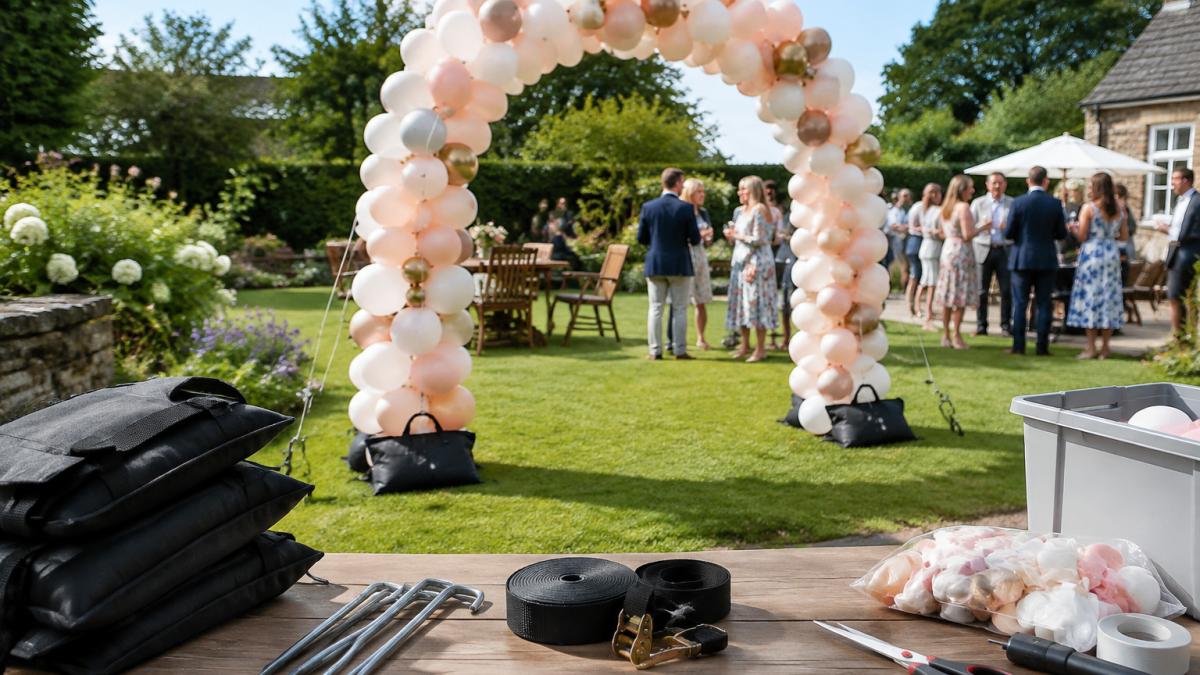
Weighting Methods: Sandbags, Bases and Anchor Points
Three weighting methods work well for outdoor arches. Each suits different ground and event types.
- Sandbags: Cheap and flexible. Use at least two per leg on soft ground, and more on the windward side.
- Weighted bases: Sturdy and reusable. Ideal for hard surfaces like patios, where stakes cannot be used.
- Anchor points: Stakes or ground anchors for lawns. Only use these on firm soil, and angle them away from the arch so the tension pulls against the ground.
Mix methods if needed. For example, use weighted bases on paving and stakes on the lawn beside it. Always check that weights sit flat and cannot slide.
Wind Speed Thresholds: When to Take the Arch Down
Use the forecast as your first check and judge conditions on site as your second. Have a plan for moving it quickly: keep spare sandbags and cable ties on site, and brief one person to take responsibility for the decision. If the arch is for a public event, record your wind check in the event risk assessment so there is a clear audit trail.
The article sets out a clear sequence for anchoring an outdoor arch and a few weighting options, summarised below.
| Weighting method | Best for | Key point |
|---|---|---|
| Sandbags | Soft ground | At least two per leg, more on windward side |
| Weighted bases | Hard surfaces like patios | Sturdy and reusable, stakes cannot be used |
| Anchor points | Firm lawns | Angle away from arch, only on firm soil |
Outdoor Balloon Arch Stand Options: Materials and Installation
Essex Light Up Numbers offers delivery and installation, which removes the guesswork from setting up on the day.
How Long Does a Balloon Arch Last Outside?
Plan to inflate on the day of the event, not the day before, to keep balloons looking fresh.
Sun, heat and wind all shorten the life of an arch. Shade and a sheltered spot can add hours to its lifespan.
Latex vs Foil: Durability, UV Exposure and Oxidation
Latex and foil behave differently outdoors.
Keep balloons in shade where possible, as heat and sun shorten the life of an arch.
Outdoor Balloon Arch Ideas for Weddings, Parties and Corporate Events
Outdoor arches work well for many events. A few ideas to consider:
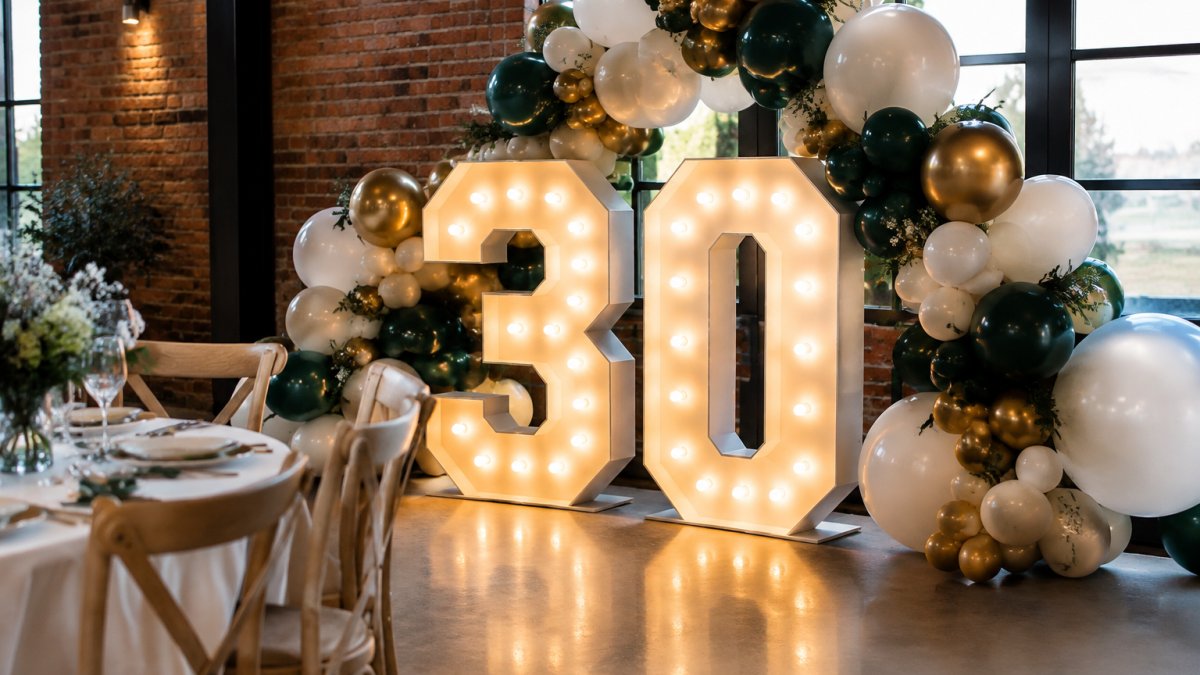
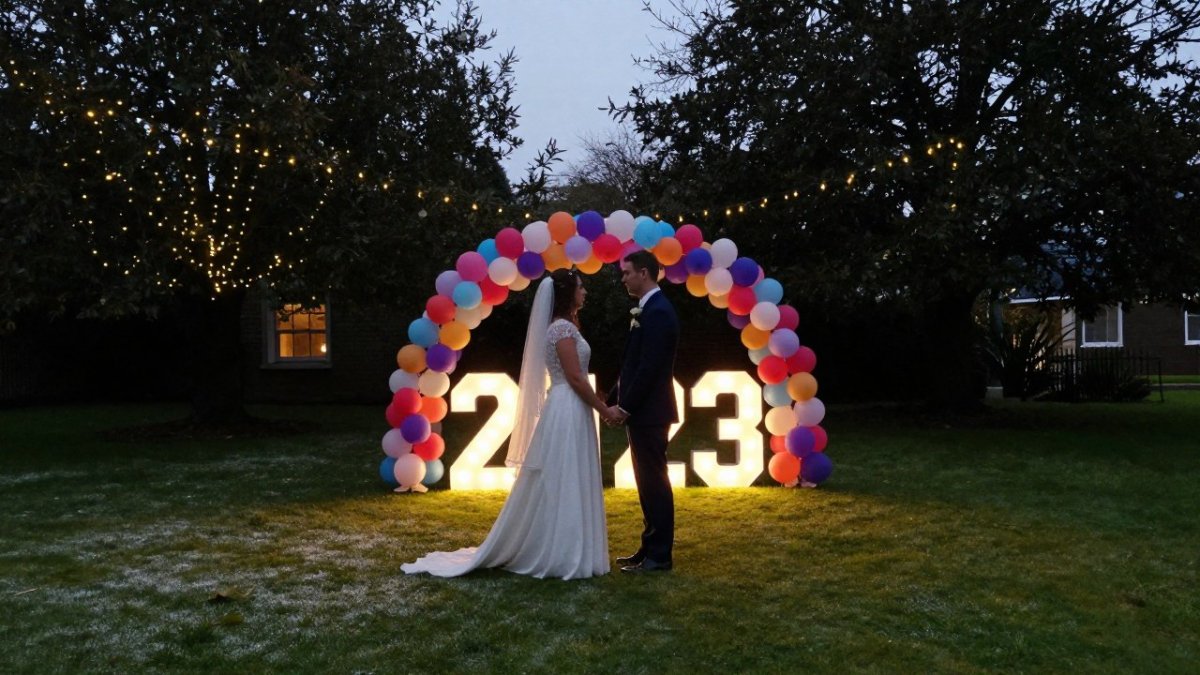
- Wedding arch: Frame the ceremony spot with soft-toned balloons and a light-up number
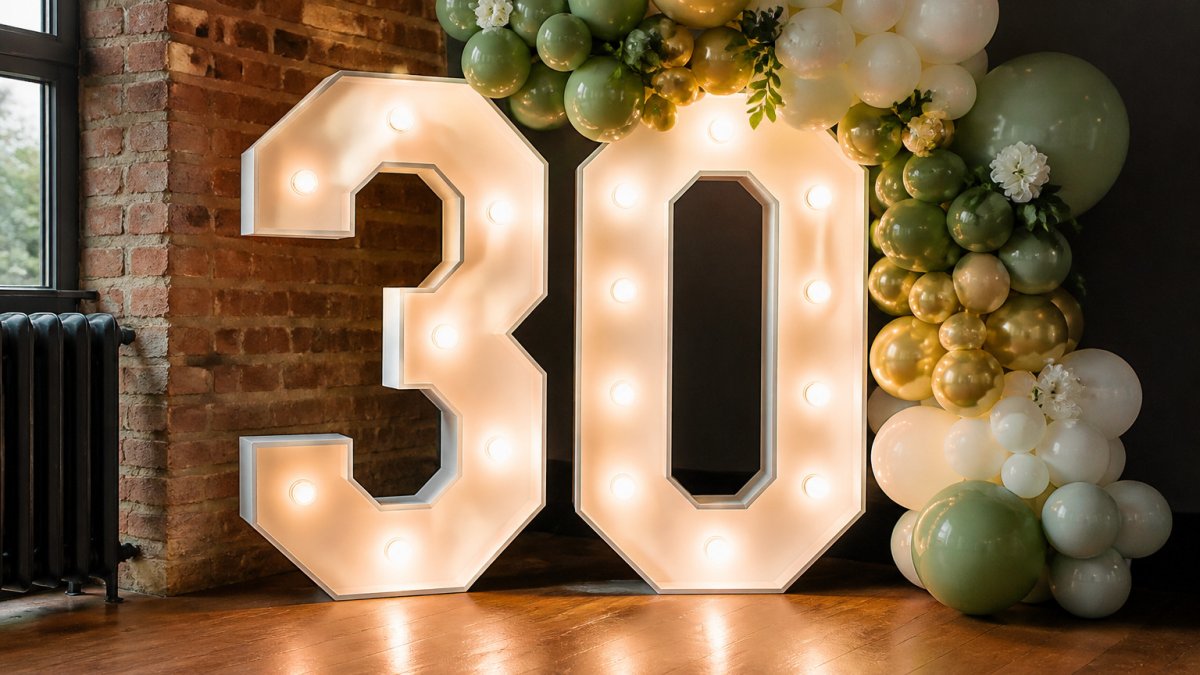
- Milestone birthday: Place a light-up number at the centre of an arch for photos
- Corporate event: Use brand colours and a sheltered entrance for guests to pass through
For weddings, light-up numbers look elegant against an organic arch. For parties, bold colours and large numbers make the best photo backdrops.
Booking Your Outdoor Balloon Arch With Essex Light Up Numbers
Outdoor arches need careful planning, and Essex Light Up Numbers can help you get it right. We provide, deliver and install light-up number displays paired with balloon arches. One customer who booked us for a 60th birthday said the team were really helpful in talking through what would work to meet her vision.
Pricing depends on the size of the display, the date and delivery, so please contact us for a quote. Get in touch with Essex Light Up Numbers to plan your outdoor arch and make your event sparkle.
Frequently Asked Questions
Can you put a balloon arch outside?
Yes, a balloon arch can go outside, but it needs more preparation than an indoor one. Wind is the main risk, so the arch should be secured and installed on flat ground away from sharp objects. Choose a sheltered spot where possible, avoid direct midday sun, and check the forecast before the day. If wind gusts become strong, consider taking the arch down rather than risk it blowing over. Good planning makes an outdoor arch both safe and striking in photographs.
How long will a balloon arch last outside?
A balloon arch kept outdoors can start to sag, lose its shape or pop, depending on conditions. Direct sunlight, heat and wind all speed up deterioration. Latex balloons can be more prone to UV-related degradation than foil. For an event that runs over several days, plan to inflate the arch on the day itself and expect to replace damaged balloons.
Will heat or direct sunlight make balloons pop?
Yes, heat and direct sunlight can cause balloons to expand, lose helium or pop. Warm air makes the gas inside expand, which stretches latex beyond its limit, while UV exposure weakens the material over time. Keep the arch in shade where possible, avoid placing it against hot surfaces, and inflate balloons in cooler parts of the day.