 ultimate-guide
Light Up Numbers for Party: Hire or Buy Guide 2026
Table of Contents
- Why Light Up Numbers Steal the Show at Any Party
- Large Light-Up Numbers for Hire: What You Get
- Buy Light-Up Numbers: When Buying Makes Sense
- DIY Light-Up Numbers: A Realistic Look
- Light-Up Numbers with Balloon Arch: Styling Ideas
- Choosing the Right Size, Placement and Power
- Frequently Asked Questions
Last Updated: October 8, 2026
Why Light Up Numbers Steal the Show at Any Party
Light up numbers for party décor turn a milestone age into a photo moment guests queue up for.
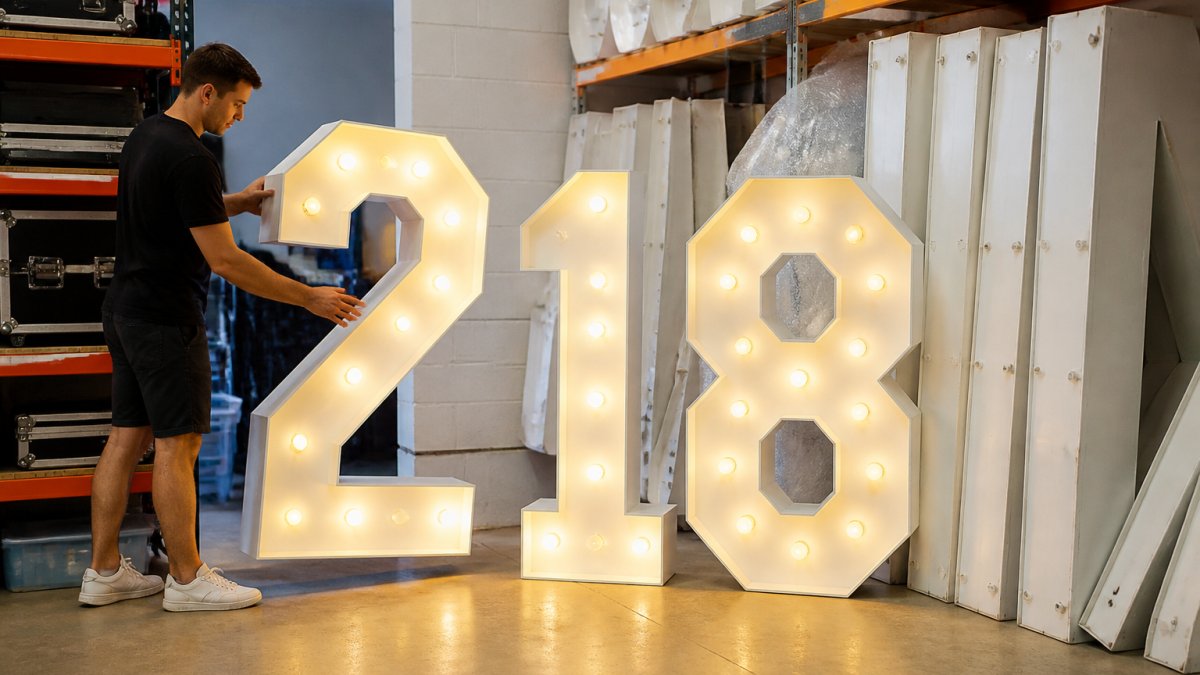
That reaction is not accidental. A light up number is a freestanding, illuminated digit, typically around 1.2 metres tall, built from an LED-lit frame with a white or printed finish. It gives a birthday, wedding or anniversary a single, unmissable focal point instead of scattered decorations competing for attention.
Below, we break down the two routes most people take, hire or buy, plus the DIY option, sizing, power and styling. Most guides skip the logistics. We will not.
Large Light-Up Numbers for Hire: What You Get
Hiring large light-up numbers for hire means you get the display, delivery, setup and collection handled for you, so the numbers are standing, lit and positioned correctly before guests arrive. For a one-off celebration, that is usually the simplest path.
Here is what a typical hire covers:
- Individual digits or a full number set for milestone ages
- Delivery to your venue on the day
- Positioning and setup by the supplier
- Collection afterwards, so nothing lives in your hallway
Delivery, Setup and Collection Explained
Timing is where hire earns its keep. A supplier delivering on the day removes the single biggest risk in event décor: you, on the morning of the party, trying to assemble something you have never built before.
A sensible hire timeline looks like this:
| Stage | What Happens | When |
|---|---|---|
| Booking | Confirm digits, date, venue and balloon arch pairing | Weeks ahead |
| Delivery | Numbers arrive at the venue | Day of event |
| Setup | Positioning, power connection, lighting check | Before guests arrive |
| Collection | Supplier removes everything | Next working day |
Buy Light-Up Numbers: When Buying Makes Sense
Buying light-up numbers pays off when you will reuse them. A family marking several milestone ages across a few years, or an event planner running regular celebrations, gets more value from owning a set than hiring one repeatedly.
The trade-off is everything hire absorbs: storage, transport, setup and power. Before buying, be honest about where the numbers will live between events. A 1.2 metre digit is not a small object.
Storage, Care and Reusing Your Numbers
- Store upright or flat, never leaning under weight
- Keep the power lead coiled loosely, not kinked
- Test each digit before the event, not on the day
- Transport in the original packaging if you kept it
DIY Light-Up Numbers: A Realistic Look
DIY light-up numbers are cheaper on materials and much more expensive on time. Building your own means sourcing a frame, wiring an LED strip, hiding the power supply and hoping the whole thing stands straight under party lighting. The honest version: it is a weekend project with a real chance of a visible cable, an uneven glow or a digit that will not sit flat. If you enjoy the build and have the tools, it can work. If you want the numbers to look shop-quality in photographs, it usually does not.
The Real Cost and Time of a DIY Build
Most people underestimate the hidden costs. A basic DIY setup typically involves:
- A wooden or MDF number blank (often sold as a craft shape)
- A low-voltage LED strip or fairy lights
- A 12V power supply or battery pack
- Wiring, connectors, and a soldering iron if you are joining strips
- Paint, primer, or a printed finish
- Fixings to keep the number upright
Add those up and the saving against a hire or ready-made purchase narrows quickly, especially once you value your own time. A common pattern is that the first DIY attempt costs nearly as much as a mid-range ready-made number, but takes a full weekend and still needs a second attempt to look right.
Safety and Electrical Basics You Cannot Skip
Any mains-powered DIY display must be treated as an electrical project, not a craft project. In the UK, electrical equipment used at events should be safe and suitable for the environment, and if you are hiring a venue, their insurance and health-and-safety rules may restrict what you can plug in or leave unattended. Key points:
- Use a low-voltage LED driver rather than wiring directly to mains.
- Keep all connections off the floor and away from guest traffic.
- Do not run cables across fire exits or under carpets where they can overheat.
- If the display will be outdoors, use equipment rated for outdoor use and a residual current device (RCD) on the supply. HSE guidance on electrical safety at events
- Never leave a DIY display plugged in unattended overnight.
If you are not confident with wiring, the safer route is a ready-made unit or a hire package where the supplier takes responsibility for electrical safety.
When DIY Actually Makes Sense
DIY works best when the number is decorative rather than the main light source, when you already own the tools, and when you have time to test the build well before the event. It also suits themed or one-off shapes that are not available to hire. If your priority is a flawless photo backdrop with no visible cables, the time and risk usually point back to buying or hiring.
Light-Up Numbers with Balloon Arch: Styling Ideas
Pairing light-up numbers with balloon arch styling is the single biggest upgrade you can make to a photo backdrop. The arch frames the digits, the digits light the arch, and guests get a ready-made photo spot.
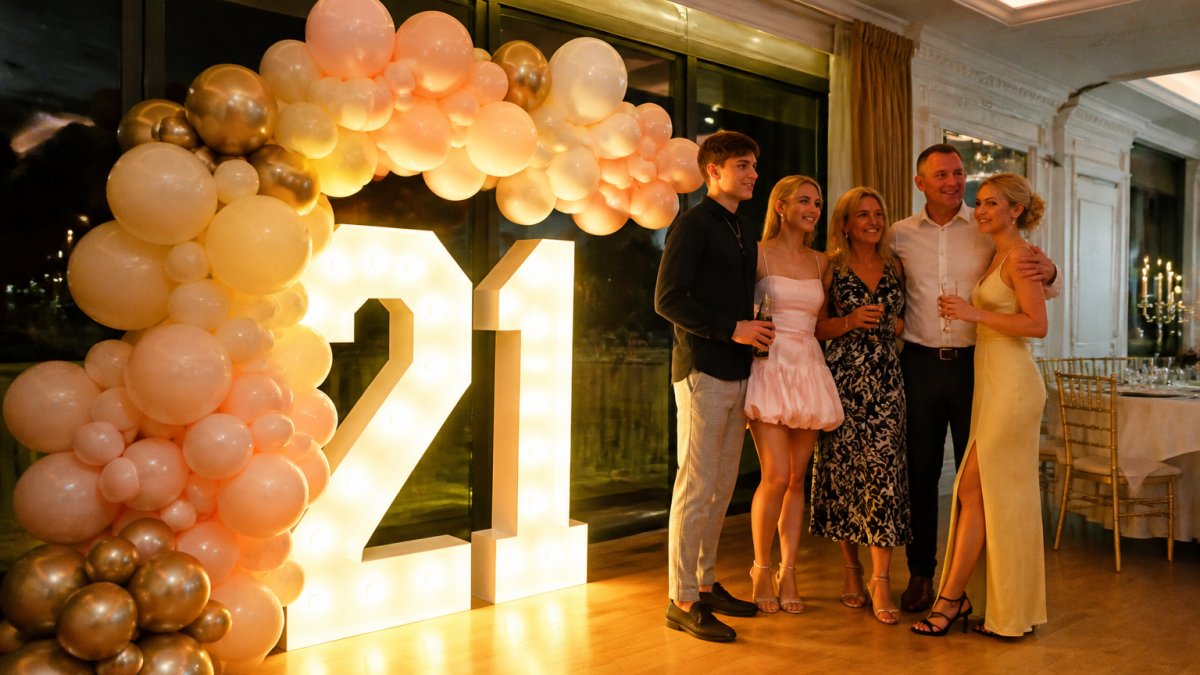
Styling that works:
- Match the arch colours to your event theme, not the numbers
- Keep the arch asymmetrical so the digits stay visible
- Place a photo backdrop behind both, not in front
- Use colour-changing LEDs to shift the mood from ceremony to party
Choosing the Right Size, Placement and Power
Getting the size, placement and power right decides whether the display looks intentional or cramped. A 1.2 metre digit is the standard for a reason: tall enough to anchor a room, small enough to fit most venues. But standard does not mean universal. A 1.2 metre number next to a low ceiling or in a narrow doorway can look awkward, and a pair of digits side by side needs more width than most people allow.
Work through these decisions in order:
- Measure the space. Leave clearance around each digit and behind it for the power lead.
- Check the ceiling. Height matters more than floor space for a lit display.
- Pick the power source.
- Confirm indoor or outdoor use.
- Plan the sightline. Position numbers where guests enter, not in a corner. The best spot is usually against a plain wall or backdrop, at eye level for photos.
Measuring for a Venue: A Practical Checklist
Before you book or buy, run through this list. It prevents the most common day-of problems:
- Doorway width: Can the number pass through upright, or does it need to be carried flat?
- Lift dimensions: If the venue is upstairs, will the digit fit in the lift, or does it need to go up stairs?
- Floor surface: Will the number stand safely on carpet, or does it need a weighted base?
- Power socket location: How far is the nearest socket, and will you need an extension lead?
- Guest flow: Is the display in a walkway where people might trip over cables or knock it over?
- Fire exits: Never block an exit or a fire door with a display or cabling. Fire safety in the workplace guidance
If you are hiring, the supplier will often do this check for you, but it is worth asking them to confirm access in writing.
Power, Battery Life and Cable Management
For cable management:
- Use cable ties or gaffer tape to secure leads along skirting boards, not across open floor.
- Keep connections off the floor and away from drinks and guest traffic.
- If using an extension lead, fully uncoil it to prevent overheating (Protect your home from fires resources).
- For outdoor use, use an RCD-protected supply and keep all connections elevated and dry.
Indoor and Outdoor Suitability
Indoor displays are usually fine in most venues, but check whether the venue has any restrictions on electrical equipment. Outdoor displays need more care: wind can topple a freestanding number, rain can damage electrics, and cold can reduce battery performance. If the event is outdoors, ask the supplier whether the unit is rated for outdoor use and whether it needs anchoring. Never assume a display is weatherproof just because it is described as suitable for outdoor events.
Cost and Logistics: What to Confirm Before Booking
Pricing depends on quantity, dates, delivery and whether you add a balloon arch. For current prices or a quote, check directly with the supplier rather than relying on a generic figure.
Getting these answers upfront turns a vague price into a real event cost.
Frequently Asked Questions
How much does it cost to hire large light-up numbers?
Hire pricing depends on the number of digits, your event date, and delivery distance, so there is no single figure. Most suppliers quote per number plus a delivery and setup fee. When comparing quotes, check whether installation, collection and a backup power supply are included. For a personalised quote for your celebration, contact Essex Light Up Numbers directly with your date and venue details.
What size light-up numbers are best for a party?
A 1.2 metre number is the most popular choice for parties because it is tall enough to anchor a photo backdrop without overwhelming a smaller venue. For a compact room, a single 1.2 metre digit beside a balloon arch works well. For larger halls or outdoor celebrations, a pair or a full milestone age creates more impact. Measure your display area first and leave at least 30cm clearance around each number.
Can light-up numbers be used outdoors?
If your party is outdoors, tell your supplier in advance so they can provide suitable equipment and advise on placement. Always keep plug-in transformers and connections sheltered from rain, and never use indoor-rated electrical equipment in wet conditions.
How far in advance should I book light-up numbers?
For peak dates such as December, summer weekends and milestone birthdays, book four to six weeks ahead to secure your preferred numbers. If you need a specific pair, like a 21 or 60, popular digits sell out first. For off-peak weekdays, two to three weeks is often enough. Booking early also gives you time to coordinate a balloon arch and confirm delivery and collection times with your venue.