 listicle
Wedding Reception Essex: Venues, Costs & Planning
Table of Contents
- What Makes a Great Wedding Reception Venue
- Wedding Venue Hire Costs: Understanding Your Budget
- Wedding Reception Decoration Ideas to Transform Your Space
- Wedding Reception Timeline: Key Dates and Milestones
- Wedding Venue Checklist: What to Look For When Viewing
- Exclusive-Use Venues and Private Estates for Intimate Celebrations
- Planning Your Perfect Wedding Reception
- Frequently Asked Questions
Last Updated: October 14, 2026
What Makes a Great Wedding Reception Venue
A great wedding reception venue combines atmosphere, practical facilities for your guest count, and flexibility to match your vision. When choosing a wedding reception venue, look beyond room size: how natural light flows, whether the layout suits both ceremony and reception, and whether there's room for your decorative touches.
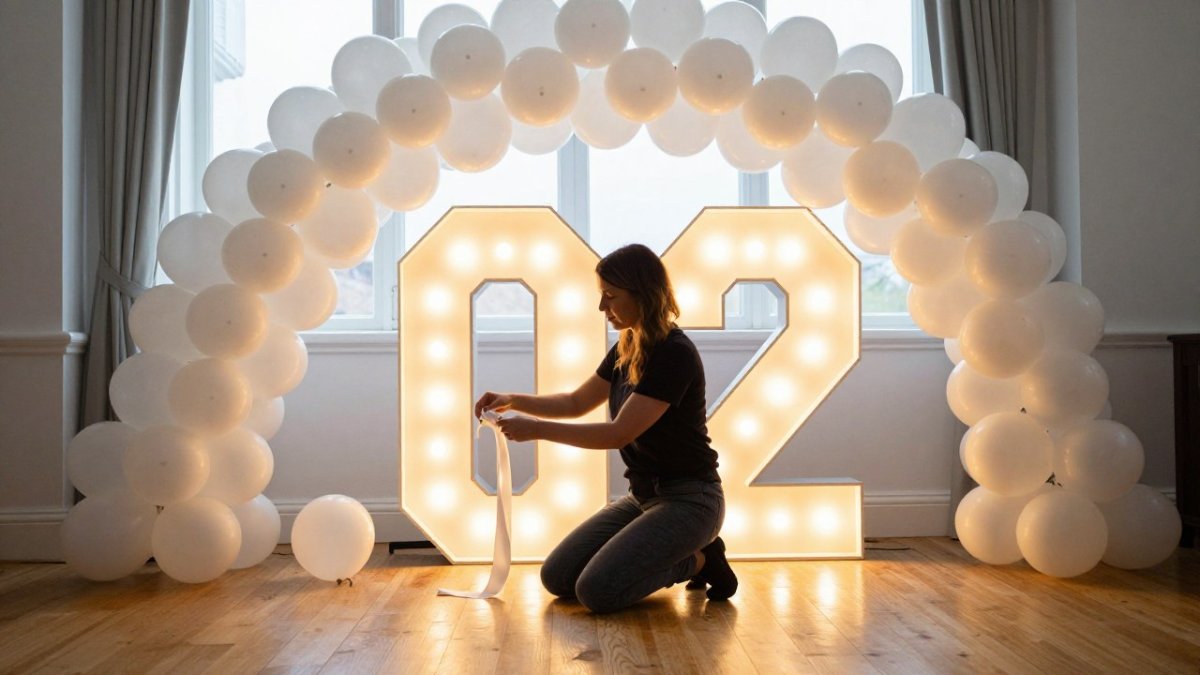
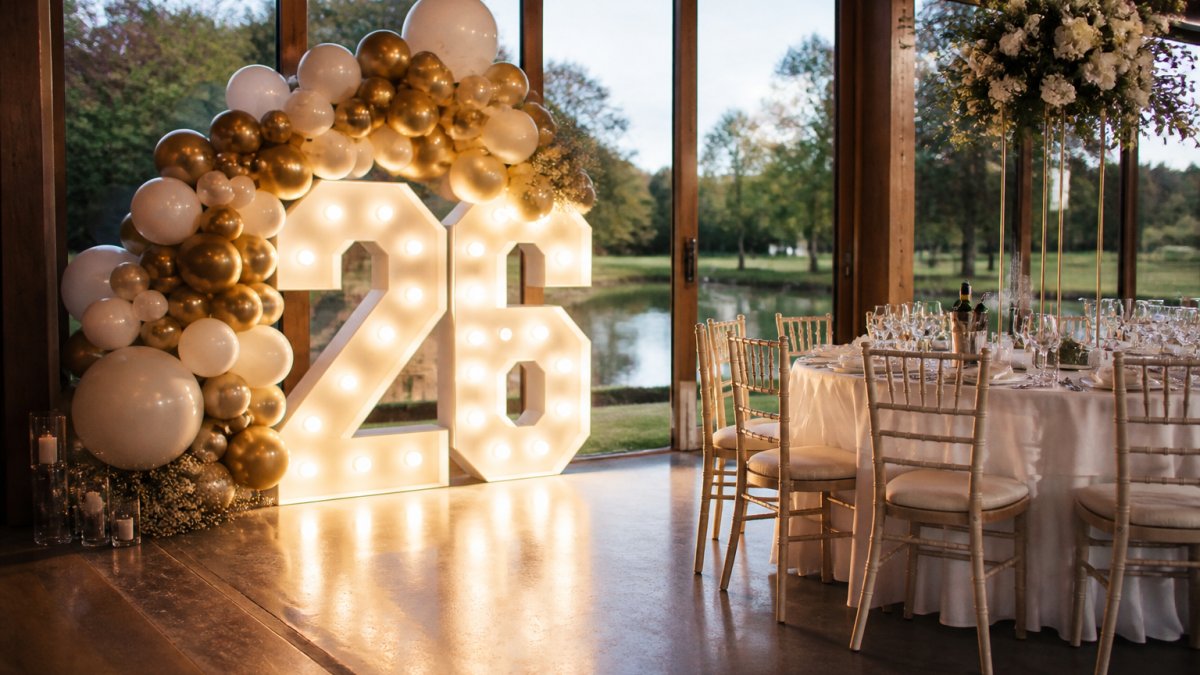
The best venues offer blank canvases where your personal style can shine. At Essex Light Up Numbers, we've worked with couples who transformed standard reception spaces into show-stopping celebrations using custom light-up number displays and balloon arches.
Location matters too: easy transport links, clear parking, and nearby accommodation all contribute to a smooth event day.
Wedding Venue Hire Costs: Understanding Your Budget
Here's how reception costs actually appear on quotes, so you can compare venues on the same basis rather than headline hire fees alone.
The four pricing models you will be quoted
- Dry hire (flat fee). You pay for the space only. Expect to source catering, bar, staffing, furniture, and sometimes even power and waste removal yourself. Dry hire looks cheapest on paper but carries the most hidden cost.
- Per-head package. A single figure per guest covering room hire, a set menu, and often a drinks package. This is the easiest to budget because the number scales predictably with your final guest count.
- Minimum spend. Common at country houses and private estates. You commit to spending a floor amount on food and drink; the room hire is then waived or reduced. If your guest list is small, a minimum spend can work against you.
- All-inclusive package. Room hire, ceremony space, catering, drinks, and sometimes accommodation bundled into one price. Fewer surprises, less flexibility.
What sits inside and outside the hire fee
Typically tables, chairs, and basic lighting are included, whilst linens, glassware upgrades, a dance floor, a stage, and additional power for decorative lighting are charged separately.
Costs that catch couples out
- Corkage and bar arrangements. Some venues allow you to supply your own alcohol for a corkage fee per bottle; others require their own bar with a minimum spend. The difference can be substantial across a full evening.
- Service charge. Frequently added to catering and bar totals rather than the hire fee, so it does not appear in the headline price.
- Supplier restrictions. A venue with an approved supplier list may prevent you using a cheaper caterer or decorator.
- Late-licence extensions. If you want the bar open beyond the venue's standard finish time, expect an additional charge and a longer notice period.
- Marquee or additional structure hire. Where the permanent building cannot hold your evening guest count, a marquee or temporary structure is a separate line item.
- Delivery, setup, and collection windows. Many venues charge for access outside a narrow window, which matters if you are bringing in large decorative pieces.
How the date changes the price
Saturday in peak season is the most expensive combination. Friday, Sunday, and off-season dates (broadly November to March) are typically discounted, and some venues offer a lower rate for reception-only bookings.
Where decoration sits in the budget
Statement pieces are discretionary, but they scale with impact rather than guest count.
A simple comparison method
For each shortlisted venue, calculate a single "cost per guest" figure including hire, catering, drinks, and service charge at your expected final numbers, then add decoration, entertainment, and transport.
Wedding Reception Decoration Ideas to Transform Your Space
Decoration transforms a functional space into an atmosphere that reflects your celebration. Combine a few statement pieces with thoughtful smaller details rather than cluttering every surface.
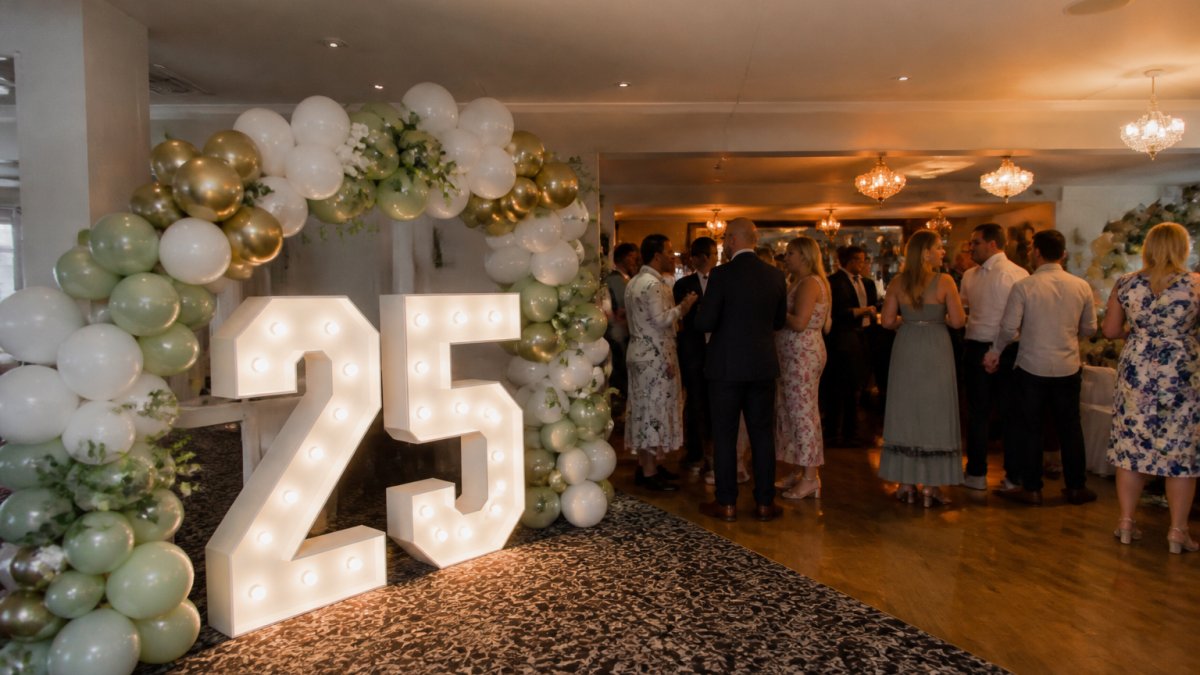
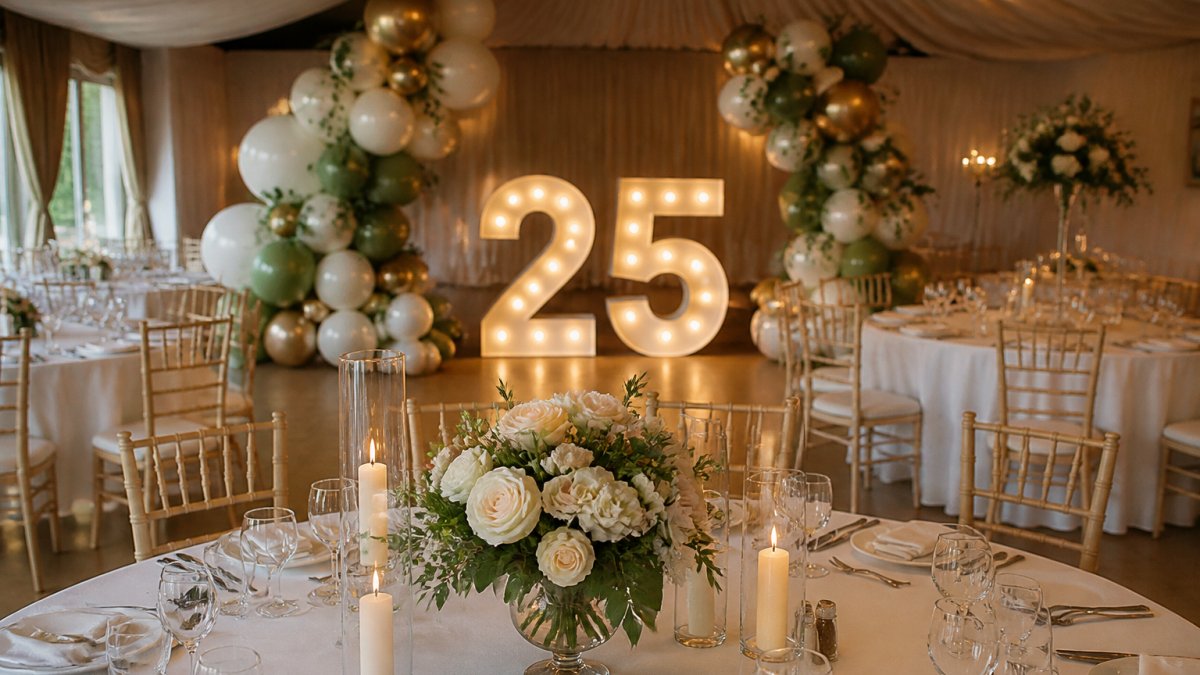
Start with a focal point that draws attention as guests enter. A large illuminated number display paired with a balloon arch creates immediate impact and becomes the natural gathering spot for photographs, working in both intimate venues and larger halls.
Lighting sets the mood more than any other element. Warm ambient lighting creates intimacy, whilst brighter displays add energy.
Table decorations should complement rather than compete with your focal point. Candles, simple florals, or personalised name cards add character without overwhelming the space. If your venue has architectural features, let those shine.
Colour coordination ties everything together. Choose two or three colours and repeat them across flowers, balloons, lighting, and table settings for visual cohesion.
Wedding Reception Timeline: Key Dates and Milestones
Planning a wedding reception event means working backwards from your chosen date. Key timelines keep you on track and avoid last-minute stress.
Start venue hunting 12-18 months before your date, particularly for a summer celebration, as popular venues book quickly in peak season.
Six to nine months before the event, finalise your guest list and send save-the-dates, giving suppliers time to block dates for catering, photography, and decorative elements.
Three to four months out, confirm all major suppliers and finalise your colour scheme, decoration style, and layout.
Two months before, confirm final numbers with your caterer, create a detailed event-day timeline, and arrange delivery and installation.
The final month covers smaller details: music selections, dietary requirements, and a detailed run-of-show.
Wedding Venue Checklist: What to Look For When Viewing
A viewing separates venues that photograph well from those that actually work for a reception. Use the checklist below and take notes on the spot.
Capacity by layout, not by headline number
A venue's advertised maximum is rarely the number that matters. Ask for three figures:
- Seated meal capacity, how many guests fit at round or trestle tables with room to move between them.
- Evening capacity, how many fit once tables are cleared and a dance floor and bar are in use. This is often higher than the seated figure, but not always, because the dance floor consumes space.
- Ceremony capacity, if you are holding the ceremony on site, the seated ceremony layout may differ again from the meal layout.
A venue that quotes one number for everything is either very flexible or has not thought it through. Ask to see a floor plan drawn to scale with your guest count marked on it.
Accessibility and step-free access
This is where many period and rural venues fall short. Check:
- Is there a step-free route from the car park to the reception room, the bar, and the toilets?
- Are accessible toilets available, and are they on the same level as the main space?
- If the ceremony is upstairs or in a separate building, how does a guest with limited mobility get there?
- Is there a hearing loop or a quiet space away from amplified music?
- Are assistance dogs welcome, and is there a suitable relief area?
Ask these questions directly and ask to see the routes rather than accepting verbal assurance.
Parking, transport, and guest logistics
- Parking capacity. Count the spaces against your guest list. If parking is limited, ask about overflow arrangements and whether overnight parking is permitted for guests who leave cars.
- Public transport. How close is the nearest rail station, and is there a taxi rank or a reliable local cab firm? For a rural venue, ask whether the venue can recommend transport and whether a minibus can access the entrance.
- Drop-off point. Where does a car or minibus actually stop, and is it covered if it rains?
- Accommodation. How many guests can stay on site, and what is the nearest hotel or B&B cluster for everyone else? A venue with no nearby accommodation shifts cost and stress onto your guests.
The practical room check
- Power. How many sockets are available, where are they, and is there capacity for additional decorative lighting? Ask whether the venue has a preferred supplier for electrical work.
- Lighting. Visit at the time of day your reception will run. Check how natural light behaves and whether the venue allows you to bring in your own lighting.
- Acoustics and sound limits. Ask whether there is a noise curfew, a sound limiter, or a restriction on live bands versus DJs. This directly affects your evening entertainment.
- Bar and catering areas. Are they separate from the dining space, and will they create queues or bottlenecks?
- Kitchen access for external caterers. If you are using your own caterer, is there a working kitchen, and what is the access route?
Inclusions and restrictions
Confirm in writing what is included (tables, chairs, linens, cutlery, glassware, basic lighting) and what is not.
Dietary, cultural, and inclusive requirements
Ask how the venue handles dietary requirements, including allergies, and whether the kitchen can accommodate specific cultural or religious menus.
Questions to ask before you leave
- What is the deposit, and when are the balance payments due?
- What is the cancellation and postponement policy?
- What time can we access the venue for setup, and when must everything be removed?
- Is there a venue coordinator on the day, or do we supply our own?
- What is the latest date we can confirm final numbers?
Finally, trust your instinct. A venue can tick every practical box and still feel wrong, or have minor limitations and feel immediately right.
Exclusive-Use Venues and Private Estates for Intimate Celebrations
Exclusive-use venues offer complete privacy and control: the space is entirely yours, with no other events or shared facilities.
Private estates and country houses are popular for exclusive-use bookings, often featuring beautiful grounds for photographs, multiple rooms, and inherent elegance requiring minimal decoration.
Exclusive-use venues typically cost more than shared spaces, but you're paying for complete control and often beautiful grounds or historic buildings.
On-site accommodation is a significant draw: guests celebrate without worrying about driving home, and the celebration continues naturally.
When evaluating exclusive-use venues, check whether decorative elements like balloon arches and illuminated displays are permitted. Most private estates welcome them since you're hiring the entire space.
Planning Your Perfect Wedding Reception
Successful wedding reception planning combines practical organisation with creative vision, broken into manageable stages.
Start by establishing your core vision: the atmosphere, colour palette, and mood.
Create a detailed budget early and stick to it, allocating funds across venue, catering, entertainment, photography, and decoration. Statement decorative pieces deliver disproportionate impact relative to their cost.
Build a timeline working backwards from your event date, identifying key decision points and booking deadlines. This prevents discovering your preferred venue or supplier is already booked.
Delegate where possible, whether to a professional planner or trusted friends and family. Clear communication about responsibilities prevents confusion.
Finally, perfection isn't the goal; a memorable celebration is. Focus your energy on the elements that matter most to you and your guests.
Planning a wedding reception involves balancing practical considerations with creative vision. Essex Light Up Numbers specialises in creating those show-stopping focal points that guests remember, our illuminated number displays paired with custom balloon arches transform reception spaces into elegant, Instagram-worthy settings.
Frequently Asked Questions
How much does a wedding reception venue cost?
Wedding reception venue costs depend on guest count, venue style, location, and included services. Pricing varies significantly based on whether you choose exclusive use, on-site catering, accommodation, and ceremony facilities. Contact Essex Light Up Numbers and local venues directly for current quotes tailored to your specific requirements and date.
How far in advance should I book a wedding reception venue?
Book your wedding reception venue 12-18 months ahead for peak season (May-September). Popular venues often have limited availability, especially for weekend dates. Booking early gives you choice of dates and time to plan decoration details like light-up displays and balloon arches that create memorable photo opportunities.
What should I include on my wedding venue checklist?
Your wedding venue checklist should cover: guest capacity for your layout, ceremony and reception spaces, catering and bar facilities, on-site accommodation options, parking and transport links, accessibility for all guests, decoration permissions (including light-up displays), exclusive-use terms, weather contingencies, and included versus additional services. Viewing the space in person helps you visualize how decoration ideas like illuminated displays will work in the actual setting.
Can I use light-up number displays at my wedding reception venue?
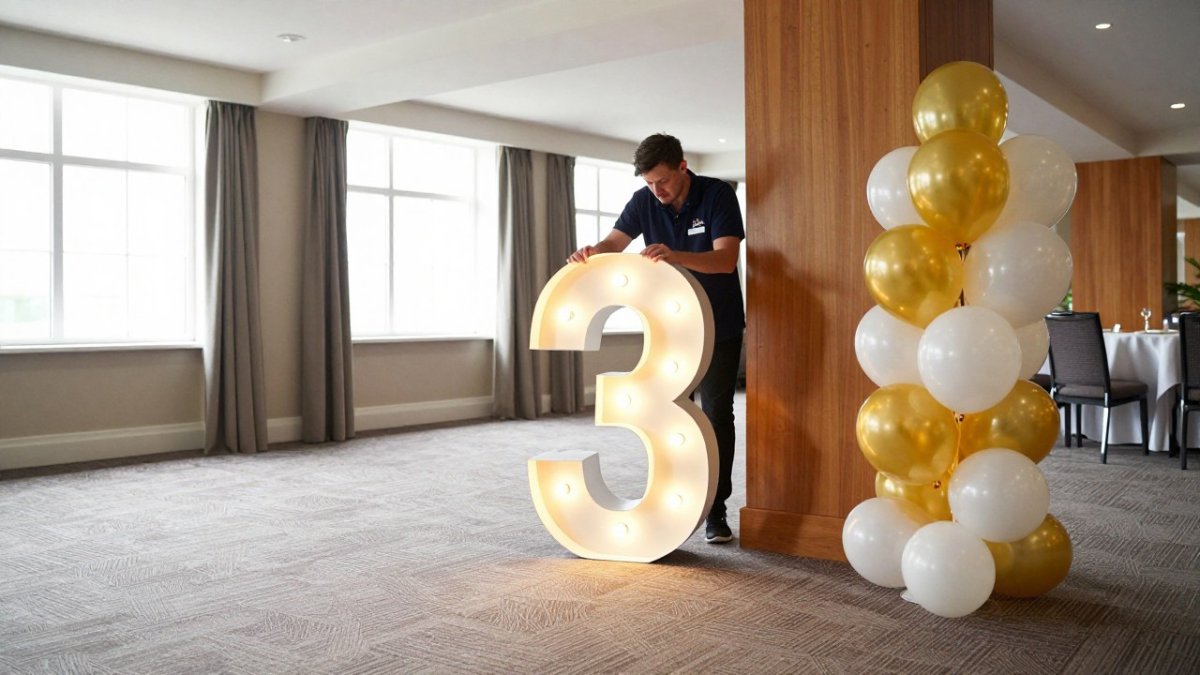
Most wedding reception venues welcome decoration additions like light-up numbers and balloon arches, as they create stunning focal points for photos and celebrations. Check your venue's decoration policy and power requirements when planning. Essex Light Up Numbers handles delivery and installation, so you can focus on enjoying your day while your vision comes to life.
Frequently Asked Questions
How much does a wedding reception venue cost in Essex?
Wedding reception venue costs depend on guest count, venue style, location, and included services. Pricing varies significantly based on whether you choose exclusive use, on-site catering, accommodation, and ceremony facilities. Contact Essex Light Up Numbers and local venues directly for current quotes tailored to your specific requirements and date.
How far in advance should I book a wedding reception venue?
Book your wedding reception venue 12-18 months ahead for peak season (May-September). Popular venues often have limited availability, especially for weekend dates. Booking early gives you choice of dates and time to plan decoration details like light-up displays and balloon arches that create memorable photo opportunities.
What should I include on my wedding venue checklist?
Your wedding venue checklist should cover: guest capacity for your layout, ceremony and reception spaces, catering and bar facilities, on-site accommodation options, parking and transport links, accessibility for all guests, decoration permissions (including light-up displays), exclusive-use terms, weather contingencies, and included versus additional services. Viewing the space in person helps you visualize how decoration ideas like illuminated displays will work in the actual setting.
Can I use light-up number displays at my wedding reception venue?
Most wedding reception venues welcome decoration additions like light-up numbers and balloon arches, as they create stunning focal points for photos and celebrations. Check your venue's decoration policy and power requirements when planning. Essex Light Up Numbers handles delivery and installation, so you can focus on enjoying your day while your vision comes to life.