 how-to
How to Style a Balloon Garland for a Wedding Venue
Last Updated: October 28, 2026
Quick Summary
To style a balloon garland for a wedding venue, first measure the space and plan where it will sit, then choose a restrained palette of two or three colours that suits the venue and flowers. Build loose, varied clusters of mixed-size latex balloons along a frame, and secure the base firmly so it holds in wind.
- Measure the wall or arch frame twice and record width and height in centimetres.
- Use no more than three colours plus one metallic accent for a formal venue.
- Mix small, medium and large balloons, using larger sizes as the base of each cluster.
- Plan roughly 20 to 30 balloons per linear metre for a full look, plus spares.
- Weight outdoor frames with sandbags or stakes, since tape alone fails in a gust.
Table of Contents
- Planning Your Wedding Balloon Garland Before You Start
- Choosing Your Wedding Balloon Garland Colour Combinations
- Organic Balloon Arch Styling Trends for Weddings
- Materials, Tools and Balloon Sizing for Your Display
- Building Clusters and Shaping the Garland
- How to Attach Balloon Garland to Light Up Numbers
- Outdoor Installation, Timing and Booking Your Wedding Display
- Frequently Asked Questions
Planning Your Wedding Balloon Garland Before You Start
The planning stage is important when preparing a wedding display. Before you buy a single balloon, measure your space, decide where the garland will sit and agree on who installs it. A garland that looks perfect in a photo can dwarf a small room or disappear against a busy backdrop.
Start with four questions:
- Where will the garland sit? A ceremony arch, a head table backdrop and a photo corner all need different sizes.
- How much light and space is there? Check ceiling height, doorways and any wall fixtures.
- Is it indoors or outdoors? Wind and sun change which balloons and fixings you can use.
- Who sets it up? Decide early whether you or a professional will install it.
Measure the wall or arch frame twice. Write the width and height down in centimetres. That single number will guide every other choice, from how many balloons you need to how tight the clusters should be.
Choosing Your Wedding Balloon Garland Colour Combinations
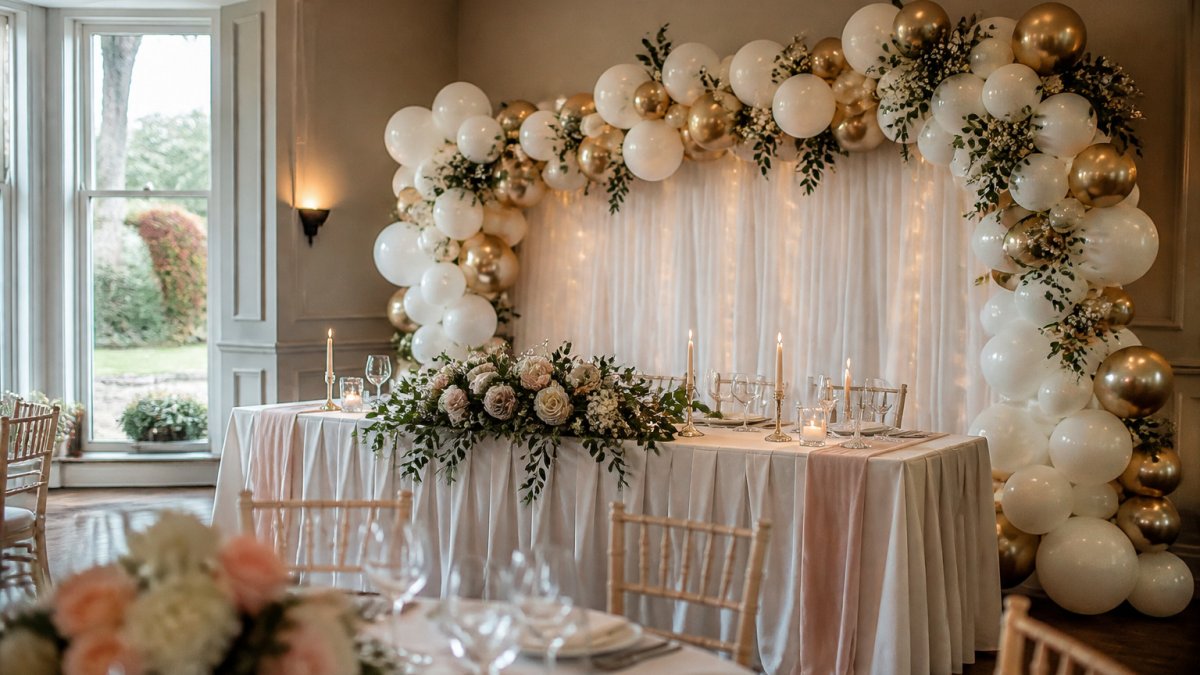
Colour sets the mood more than shape does, and at a wedding it has to work with everything else in the room. A soft palette of blush, ivory and sage feels calm and romantic. Bold jewel tones feel dramatic and modern. Most couples do best with three colours at most, plus one metallic accent such as rose gold or silver.
Wedding palettes need more restraint than party palettes. Formal venues, stately homes, hotels, churches, often have fixed finishes (dark wood panelling, gilt frames, stone walls) that clash with bright primaries. A common pattern among wedding stylists is to pull two colours from the venue itself and add one accent from the bridal party flowers.
Use these principles when you plan:
- Match your flowers and linens first. Bring a sample of your table linen, a bouquet ribbon, or a swatch of the bridesmaid dress fabric to the supplier. Balloons should echo those tones, not compete with them.
- Test colours under your venue lighting. Warm lights make white look cream and pale pink look peachy. Cool LED lighting can turn sage green grey. Ask your venue if you can visit during the evening setup to check swatches under the actual bulbs.
- Keep the palette restrained for formal settings. Two neutrals plus one muted accent (for example ivory, taupe and dusty blue) reads more elegant than four brights. Save the multi-colour look for relaxed barn or garden receptions.
- Mix sizes within each colour. Varied balloon sizes look more natural than one uniform size, and they let a single colour read as several tones under light.
- Limit the metallic accents. One chrome or foil finish is enough. Too many foil balloons reflect flash photography and can look busy in formal portraits.
- Coordinate with signage and stationery. If your place cards, table plan and welcome sign use a specific green or gold, repeat that exact tone in the garland so the whole scheme ties together.
Organic Balloon Arch Styling Trends for Weddings
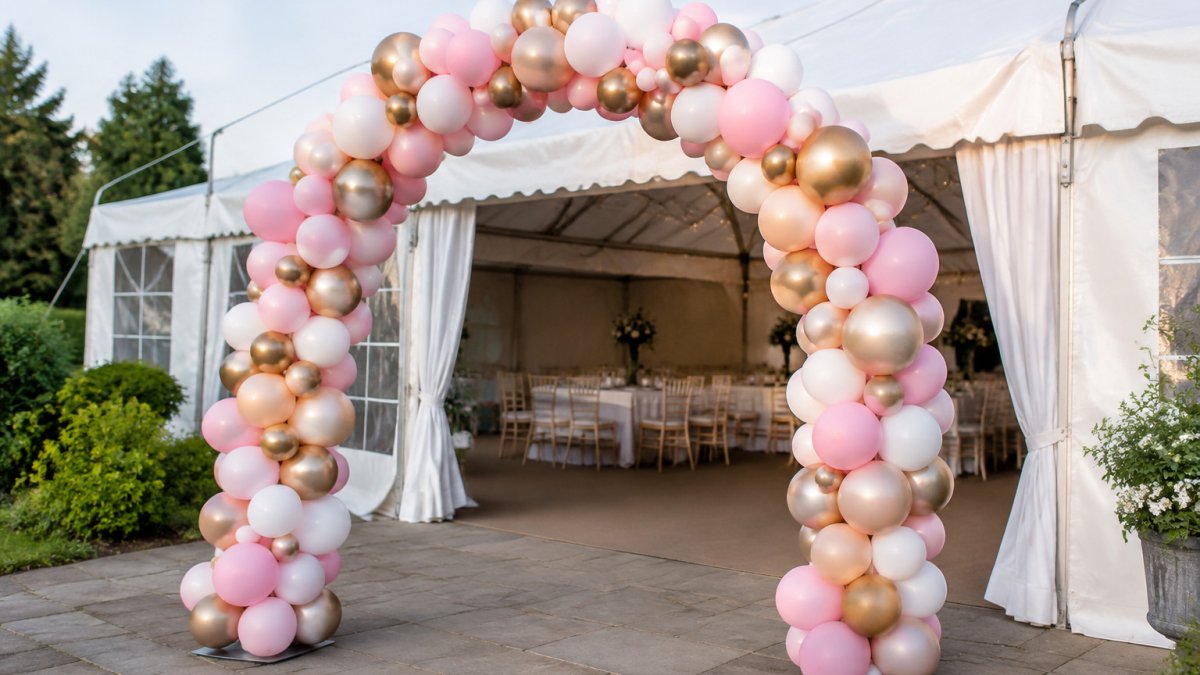
Instead of neat, uniform rows, the balloons are grouped in loose, varied clusters that look like they grew naturally along the frame. Many couples like this look because it suits gardens, barns and outdoor marquees.
Here is what makes an organic arch work:
- Vary the cluster size. Mix large, medium and small clusters along the frame.
- Keep the spacing uneven. Gaps should look intentional, not accidental.
- Use one or two greenery pieces. Eucalyptus or foliage softens the balloon colours.
- Anchor the base well. A loose-looking arch still needs a stable frame underneath.
Materials, Tools and Balloon Sizing for Your Display
You will need a short list of materials to build a wedding garland yourself, and most of them are easy to buy:
- Latex balloons in your chosen colours
- Balloon garland tape or a strong string
- A balloon pump or helium, depending on the look you want
- Hooks, clips or a garland base to attach the display
- Scissors and a measuring tape
For sizing, many decorators use a mix of small, medium and large balloons. Larger balloons form the base of each cluster and smaller ones fill the gaps. A rough rule is to buy around 20 to 30 balloons per linear metre for a full, dense look, and fewer for a lighter style. Always add a few spares for pops and mistakes.
Building Clusters and Shaping the Garland
Clusters are the building blocks of any garland. Group three to five balloons of mixed sizes, then tie them together at the base. Attach each cluster to your tape or string, working from one end of the frame to the other.
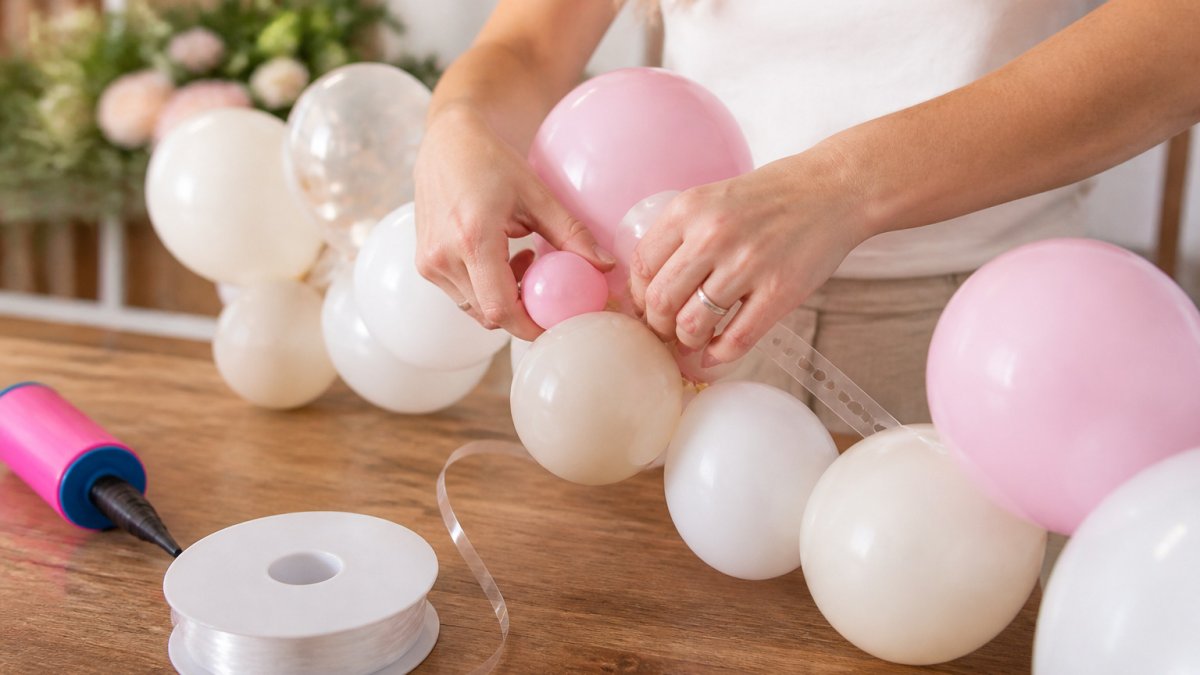
Follow these steps for a clean result:
- Lay out the clusters on the floor first. This shows you the shape before you attach anything.
- Work from the centre outwards. This keeps the garland balanced on both sides.
- Tie each cluster firmly. Loose knots slip once the garland is hung.
- Step back often. Check the shape from the same distance your guests will see it.
Common mistakes include making every cluster the same size, leaving one side much heavier than the other and skipping the test hang. Hang a section early so you can fix problems before the day.
How to Attach Balloon Garland to Light Up Numbers
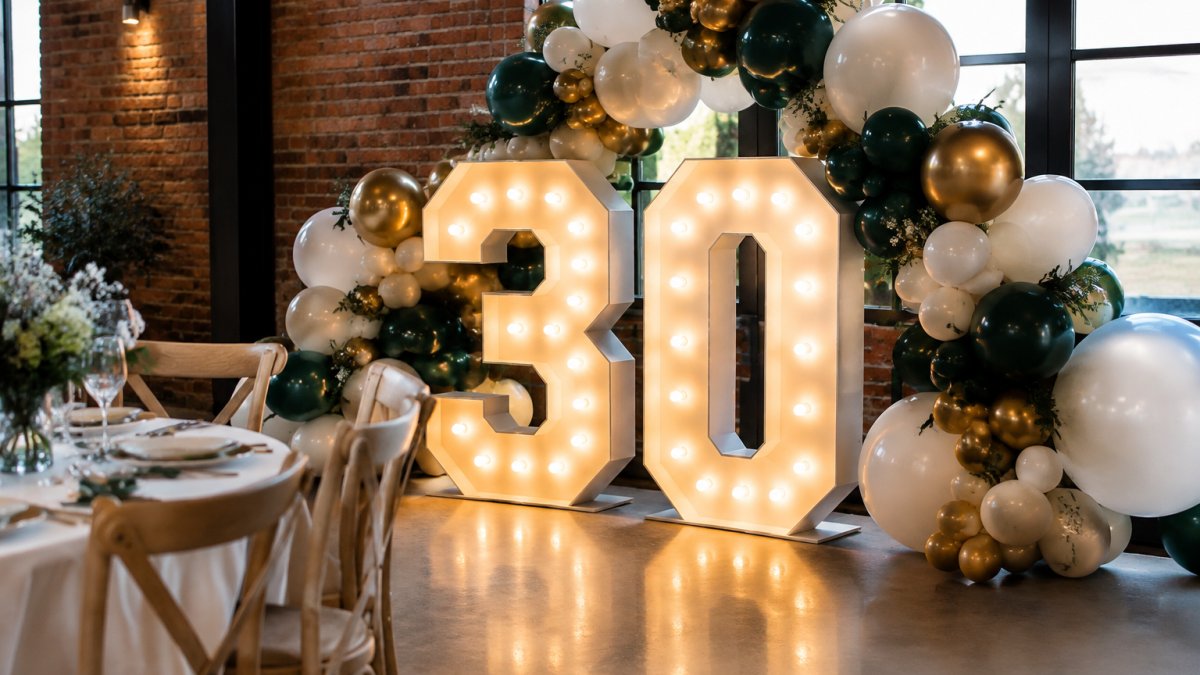
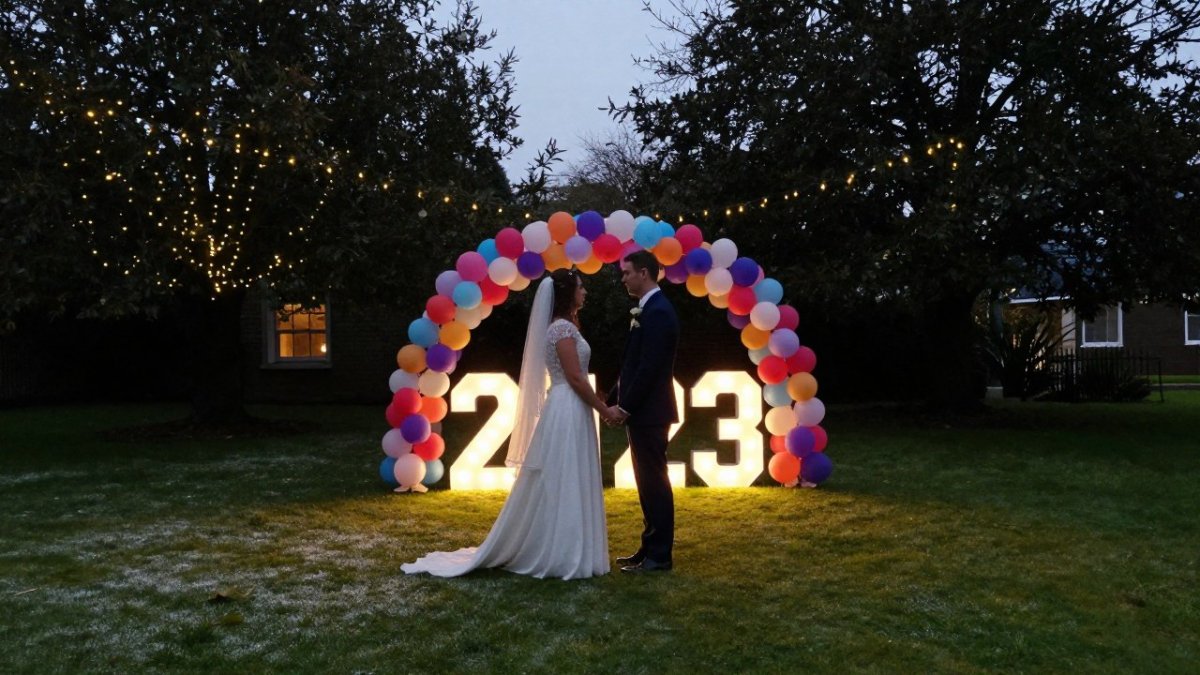
If you are pairing your garland with a light-up number, attach the balloons to the frame so the number stays visible and the lights are not blocked. Position the garland around the edges and leave the centre clear.
Follow this process:
- Switch the number on and check that every light works.
- Place the garland tape along the outer edge of the frame.
- Attach clusters at the top first, then work down the sides.
- Keep the cables and power point accessible and away from the balloons.
Do not wrap balloons tightly around the light-up number itself. Heat from the lights and pressure from the balloons can both cause problems.
Outdoor Installation, Timing and Booking Your Wedding Display
Outdoor displays need extra planning because latex reacts to heat, sunlight and wind. Above roughly 24°C, latex softens and balloons can stretch or pop; direct sun for more than a few hours weakens the surface and fades darker colours. Wind is the bigger risk: a garland with a large surface area acts like a sail, so anchoring matters more than tape.
Use these practical measures for outdoor weddings:
- Choose a sheltered spot. A wall, hedge or marquee side blocks wind and shade. Avoid open lawns and exposed archways if you can.
- Weight the base, don't just tape it. Sandbags, water weights or ground stakes at the frame feet stop the whole structure tipping. Tape alone will fail in a gust.
- Use UV-treated or premium latex where possible. Standard balloons degrade faster in sun; suppliers can advise on longer-life options.
- Keep helium minimal outdoors. Helium balloons rise and tug in wind; air-filled clusters on a frame are far more stable.
- Have a rain plan. Latex spots and dulls in rain. If showers are forecast, plan to move the garland indoors or cover the frame until the ceremony.
Timing and transport decide whether the garland survives to the photos:
- Build and install the day before if you are doing it yourself, so you have time to fix pops or sagging. For outdoor setups, install as close to the event as possible to limit sun exposure.
- Transport flat and protected. Lay the finished garland in a large box or lined boot space; do not stuff it into a bag. Keep it out of direct sun in the car.
- Allow a buffer for setup. A 3-metre garland typically takes one person 45-90 minutes to build and hang; double that for a first attempt.
- Check the forecast 48 hours ahead and confirm your indoor backup with the venue.
- Book early. Popular wedding dates and experienced installers fill months in advance, especially for outdoor marquees and tipis.
Pricing depends on the size, quantity of balloons, delivery distance and installation, so please visit our website or contact us for a current quote. A quick call also helps you confirm whether delivery and setup suit your venue and date.
The article's outdoor and timing guidance is easiest to scan in one place.
| Factor | Guidance | Why it matters |
|---|---|---|
| Temperature | Above roughly 24°C | Latex softens and balloons can stretch or pop |
| Direct sun | More than a few hours | Weakens latex and fades darker colours |
| Wind | Large surface area acts like a sail | Anchor the base, don't rely on tape |
| Setup time | 3 m garland: 45-90 min | Double for a first attempt |
| Install timing | Day before (DIY) | Time to fix pops or sagging |
| Rain | Latex spots and dulls | Move indoors or cover the frame |
Frequently Asked Questions
How do you attach a balloon garland to a wedding backdrop?
Attach the garland to the backdrop by threading strong string or fishing line through the balloon necks and tying it to hooks, clips or the frame at regular intervals. Start at the centre and work outwards so the weight spreads evenly. Check each attachment point before guests arrive, and add extra points on any section that sags. For light-up number displays, the garland is usually fixed to a base or frame so it stays steady in a breeze. If you are unsure of the fixing method for your venue, ask your supplier to advise before the day.
What are the best colour palettes for wedding balloon garlands?
Most couples choose two or three tones that match the flowers, linens or venue decor. Soft neutrals such as cream, blush and sage suit a relaxed outdoor setting, while bolder combinations like navy and gold work well for formal evening receptions. Mixing balloon finishes, such as matte with chrome, adds depth without extra colours. Test your chosen palette against the venue lighting before ordering, as warm light can shift pastel shades noticeably.
Can you use balloon garlands outdoors for weddings?
Outdoor displays need planning. Check with the venue about any restrictions on fixings into grass, walls or trees.
How far in advance can you make a balloon garland for a wedding?
Pricing depends on quantity, dates and delivery, so request a quote from Essex Light Up Numbers on its website for current costs and availability.