 how-to
How Long Do Helium Balloons Last: A 2026 Guide
Table of Contents
- Typical Float Times for Helium Balloons
- How Long Do Latex Helium Balloons Last
- How Long Do Foil Helium Balloons Last
- Factors That Affect Balloon Longevity
- How to Make Helium Balloons Last Longer
- How to Keep Foil Balloons Inflated
- Planning Your Event Timeline
- Troubleshooting Balloons That Sink or Shrink
- Frequently Asked Questions
Last Updated: October 16, 2026
Typical Float Times for Helium Balloons
How long do helium balloons last? The answer depends on the balloon material, but most helium-filled balloons float between 8 and 15 hours indoors. Foil balloons last significantly longer, often staying afloat for 2 to 5 weeks, while latex balloons typically float for just 8 to 15 hours before losing lift.
The difference comes down to how quickly helium escapes through the balloon material. Latex is porous, so helium molecules gradually pass through it. Foil balloons have a plastic-like coating that slows this process dramatically.
Understanding these timeframes matters for event planning. If you're decorating for a same-day party, latex balloons work fine. For multi-day celebrations or corporate displays, foil balloons are essential.
How Long Do Latex Helium Balloons Last
Latex helium balloons typically stay inflated for 8 to 15 hours, depending on conditions. This is the most common balloon type for parties and decorations because they're affordable and easy to fill.
The float time for a standard latex balloon depends on several factors:
- Balloon size: Smaller balloons (around 23-28 cm) float slightly longer than larger ones (around 45 cm or 50 cm) because they contain less helium relative to their weight.
- Helium quality: Pure, industrial-grade helium keeps balloons afloat longer than lower-quality helium.
- Room temperature: Warm environments cause helium to expand and escape faster.
- Storage before use: Balloons stored in cool conditions before inflation float longer.
A fresh latex balloon filled with quality helium can stay afloat for up to 15 hours. A larger balloon might only last 8 to 12 hours. After this time, the balloon gradually loses lift and sinks.
How Long Do Foil Helium Balloons Last
Foil balloons, also called Mylar balloons, are game-changers for events requiring longer-lasting decorations. These balloons float for 2 to 5 weeks when filled with quality helium, making them ideal for multi-day celebrations.
Foil balloons have a metallic plastic coating that acts as a barrier to helium escape (Balloons as an overlooked source of micro(nano)plastic risk). This coating is what gives them their reflective shine and durability.
Key differences from latex:
- Float duration: 2 to 5 weeks versus 8 to 15 hours for latex.
- Reusability: Foil balloons can be deflated and refilled multiple times.
- Appearance: They maintain their shape and sheen throughout their lifespan.
- Cost: More expensive upfront but better value for longer events.
Bubble balloons, a specialty foil type with a clear outer layer, also float for 2 to 5 weeks. They're popular for creating layered, high-impact balloon displays.
For event planners in Essex coordinating multi-day celebrations, foil balloons paired with light-up displays create stunning focal points that last throughout your entire event. Our team knows how to position them alongside 4ft light-up numbers to maximise visual impact across the full duration of your celebration.
Factors That Affect Balloon Longevity
Several environmental and procedural factors determine how long helium balloons actually stay afloat. Understanding these helps you plan decorations that last through your entire event.
Temperature and Cooler Conditions
Temperature is one of the biggest factors affecting how long helium balloons last. Helium expands in warm environments and contracts in cool ones. Warm air causes helium to escape faster through the balloon material.
Balloons in warm rooms lose lift noticeably faster than those in cool spaces:
- Warm environments (above 25°C): Balloons lose lift 20-30% faster.
- Cool conditions (15-18°C): Balloons float longer and maintain their appearance.
- Outdoor heat: Direct sunlight accelerates helium escape dramatically.
If your venue has air conditioning set to a comfortable temperature, your balloons will float longer. Events held outdoors on warm days will see balloons sink faster than indoor celebrations in cooler spaces.
For summer events, consider filling balloons closer to the start time. For winter celebrations, you can fill them earlier in the day without losing much float time.
Humidity and Environmental Conditions
Humidity affects how quickly latex balloons lose their elasticity. High humidity can cause latex to become sticky and lose its flexibility, while low humidity can make it brittle. Both extremes shorten float time.
Environmental factors that matter:
- High humidity: Makes latex material less elastic, reducing float time by 10-15%.
- Low humidity: Can cause latex to become stiff and lose its shine.
- Air circulation: Fans and open windows can cause balloons to drift and appear deflated faster.
- Sunlight exposure: Direct UV rays break down latex and foil coatings over time.
Indoor venues with stable humidity and controlled temperature are ideal for balloon displays. Outdoor events require strategic placement away from direct sun and wind.
Helium Purity and Filling Quality
Not all helium is created equal. Industrial-grade helium is purer than standard party helium, and this affects float time significantly.
Quality matters because:
- Pure helium: Molecules are smaller and escape more slowly through balloon material.
- Lower-grade helium: Often mixed with air, which escapes faster and reduces float time.
- Filling technique: Overfilling balloons can stress the material and cause faster helium loss.
- Balloon age: Old balloons that have been stored for months may have micro-tears.
When you purchase balloons, ask about the helium grade. Professional event suppliers use industrial-grade helium for longer-lasting results. Filling stations at supermarkets often use standard-grade helium, which is fine for same-day events but won't maximise float time.
How to Make Helium Balloons Last Longer
Several practical steps extend how long helium balloons stay afloat. These techniques work for both latex and foil balloons.
1. Fill balloons as late as possible. Fill latex balloons no more than 2-3 hours before your event starts.
2. Use quality helium. Request industrial-grade helium when filling. It costs slightly more but extends float time noticeably.
3. Keep balloons in cool spaces before use. Store filled balloons in a cool room away from direct sunlight. Cooler conditions slow helium escape.
4. Avoid overfilling. Fill balloons until they're firm but not stretched tight. Overfilled balloons lose helium faster because the material is stressed.
5. Apply balloon sealant. Specialized sealant sprays create a thin coating that slows helium escape. These products can extend latex balloon float time from 15 hours to 24-30 hours.
6. Use balloon weights and anchors. Even as balloons lose lift, proper anchoring keeps them in place and makes them appear inflated longer.
7. Position away from heat sources. Keep balloons away from radiators, heaters, and direct sunlight during your event.
8. Pair with air pumps for touch-ups. Keep a small pump available to top up balloons if they begin to sink during a multi-hour event.
How to Keep Foil Balloons Inflated
Foil balloons require slightly different care than latex balloons because their material is more durable but also more sensitive to certain conditions.
Keep foil balloons away from sharp objects. Even small punctures in foil cause rapid helium loss. Position them carefully in your display and away from decorative items with sharp edges.
Avoid direct contact with rough surfaces. Foil balloons can develop micro-tears if rubbed against brick walls, concrete, or rough textiles. Mount them on smooth surfaces or use protective padding.
Store in a cool, dry place before use. Foil balloons stored in humid or warm conditions may develop condensation inside, which can damage the coating.
Check seams regularly. The seam where foil pieces are joined is the weakest point. Inspect this area before and during your event.
Use ribbon or fishing line for hanging. Secure foil balloons with gentle materials that won't pinch or damage the surface. Avoid tape directly on the foil.
For event setups involving foil balloons and light-up displays, Essex Light Up Numbers recommends strategic placement that protects your balloons while maximising visibility.
Planning Your Event Timeline
Timing your balloon filling and setup correctly ensures your decorations look their best when guests arrive and throughout your celebration.
For same-day events (8-15 hour duration):
- Fill latex balloons 1-2 hours before guests arrive.
- Inflate foil balloons 4-6 hours before the event.
- Plan your balloon arch or display setup immediately after filling.
- Have a backup pump available in case any balloons lose lift mid-event.
For overnight or multi-day events:
- Fill foil balloons the evening before.
- Use latex balloons only for the first day, then replace them on day two.
- Store backup foil balloons in a cool room to refresh displays if needed.
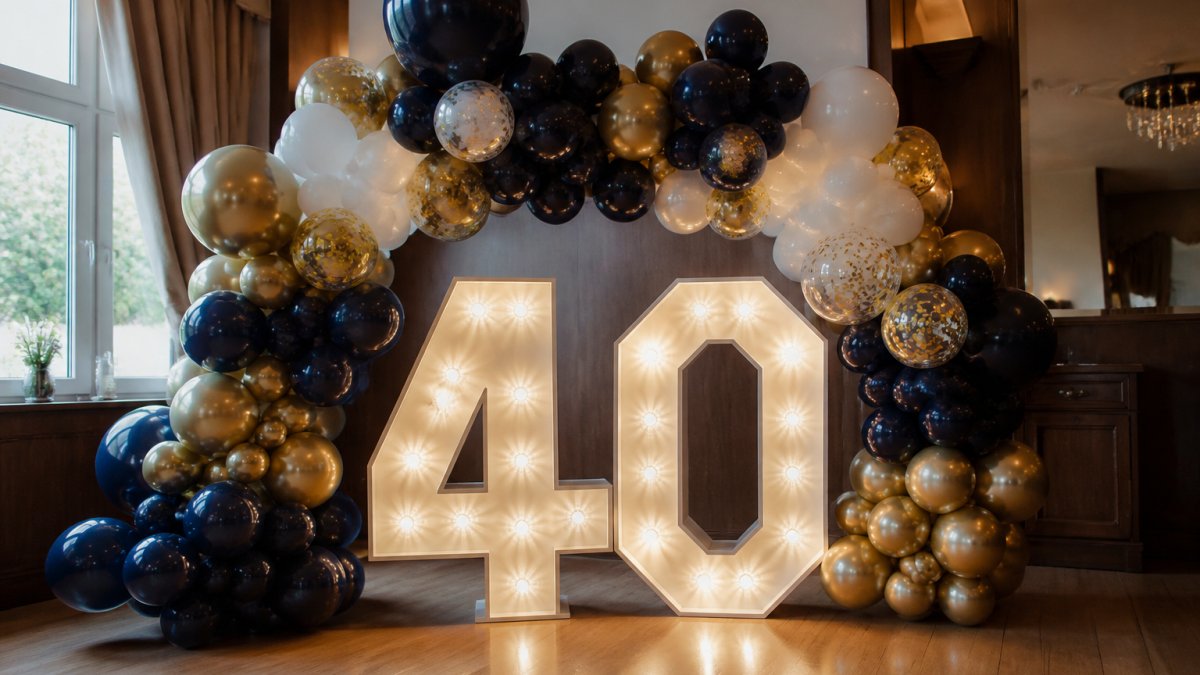
- Plan your light-up number placement before filling balloons so you know exactly where everything goes.
Typical event timeline example:
| Task |
|---|
| Prepare venue and position light-up numbers |
| Fill foil balloons |
| Assemble balloon arch |
| Fill latex balloons |
| Final positioning and touch-ups |
| Guest arrival |
| Mid-event balloon check |
| Timing |
|---|
| 3-4 hours before |
| 2-3 hours before |
| 1.5-2 hours before |
| 30-60 minutes before |
| 15 minutes before |
| Event start |
| 2 hours into event |
| Duration |
|---|
| 45 minutes |
| 30-45 minutes |
| 60 minutes |
| 20-30 minutes |
| 15 minutes |
| , |
| 10 minutes |
This timeline ensures your display looks fresh when guests arrive and maintains visual impact throughout your celebration.
Troubleshooting Balloons That Sink or Shrink
Even with careful planning, balloons sometimes lose lift faster than expected. Understanding why helps you fix the problem quickly.
Balloons sinking after 6-8 hours (should last 15 hours):
This usually means the helium quality was lower than expected or the venue was warmer than anticipated. Check your venue temperature; if it's above 25°C, this is the culprit.
Balloons appearing deflated but still floating:
This happens when balloons lose their round shape but still contain helium. It's purely visual and doesn't affect float time.
Foil balloons losing lift after 1-2 weeks:
Check for small punctures or damage to the seams. Even microscopic tears cause rapid helium loss. Inspect the balloon carefully, especially around the seam line. If you find damage, the balloon can't be repaired; replace it.
Balloons shrinking visibly:
This is normal and happens as helium gradually escapes. Latex balloons shrink noticeably after 10-12 hours. Foil balloons shrink much more slowly.
Balloons losing colour or shine:
UV exposure and heat fade balloon colours and dull foil finishes. This is cosmetic and doesn't affect float time. To prevent it, keep balloons away from direct sunlight during your event.
Planning a celebration in Essex? Essex Light Up Numbers combines stunning 4ft light-up number displays with professional balloon arch setups to create focal points that photograph beautifully and last throughout your event.
Frequently Asked Questions
How long do helium balloons last indoors versus outdoors?
Helium balloons last considerably longer indoors. Standard latex balloons float for 8-15 hours indoors in stable conditions, while outdoor exposure to sunlight, wind, and temperature fluctuations can reduce float time to 4-8 hours. Foil balloons perform better outdoors, typically lasting 2-5 days indoors and 1-3 days outside. Indoor storage protects balloons from UV damage and extreme temperature swings, which are the primary causes of premature deflation.
Can you inflate helium balloons the night before an event?
Latex balloons should ideally be filled no more than 12 hours before your event, as they lose lift gradually over time. Foil balloons are far more durable and can be inflated 3-5 days in advance without significant loss of float. If you must fill latex balloons early, store them in a cool, dark place away from sharp objects and direct sunlight. For events requiring precision timing, consider filling latex balloons on the morning of the event or a few hours beforehand.
Why do helium balloons deflate so quickly?
Helium escapes through the balloon's material naturally over time; this is called permeation. Latex balloons are porous and lose helium faster than foil balloons, which have a metallic lining that slows escape. Temperature changes, humidity, and sunlight exposure accelerate deflation by causing the helium to expand or contract. Low-purity helium or balloons filled at low pressure also deflate faster. Handling, friction, and exposure to sharp objects can create microscopic tears that speed up helium loss significantly.
How does temperature affect how long helium balloons last?
Temperature has a major impact on balloon float time. Warmer environments cause helium to expand, increasing pressure inside the balloon and speeding up helium loss through the material. Cold conditions slow helium permeation, which is why balloons last longer in cooler environments. A 10°C drop can extend float time by several hours for latex balloons. For events in warm venues or outdoors on hot days, inflate balloons closer to the event start time and consider using foil balloons, which are less affected by temperature fluctuations.