 how-to
How long does a balloon arch last?
Last Updated: October 25, 2026
Quick Summary
A balloon arch typically lasts between 12 hours and 2 weeks, depending on balloon type and environment. Air-filled balloons last 2-3 weeks indoors or 5-7 days outdoors, while helium-filled balloons last 5-7 days indoors or 2-3 days outdoors. How long a balloon arch last depends on temperature, sunlight, weather conditions, and material quality.
- Air-filled latex balloons maintain firmness for 2-3 weeks indoors without special treatment.
- Helium balloons typically last 5-7 days indoors before noticeably deflating.
- Outdoor arches degrade faster than indoor ones due to wind, rain, UV rays, and temperature swings.
- Heat above 25°C accelerates deflation, while cool temperatures around 15-18°C slow it down.
- Inflate air-filled balloons 1-2 days before events and helium balloons the morning of for best results.
Table of Contents
- How long does a balloon arch last: key factors and timelines
- Indoor versus outdoor lifespan: where your arch will live
- Temperature, sunlight, and weather: the biggest threats
- How long does a balloon garland last compared to an arch
- How early can I inflate balloons without losing durability
- How to make a balloon arch last longer: practical methods
- Planning your balloon arch timeline for event day
- Frequently Asked Questions
How long does a balloon arch last: key factors and timelines
A balloon arch typically lasts between 12 hours and 2 weeks, depending on where you place it and how you set it up. The exact lifespan depends on whether you use air-filled or helium-filled balloons, indoor or outdoor conditions, and the quality of materials you choose.
Understanding these timelines helps you plan your setup and decide when to inflate your balloons for maximum impact.
The good news: with the right approach, you can extend your arch's lifespan significantly. We'll walk you through the factors that matter most and show you practical methods to keep your display looking stunning.
Air-filled balloon arches
Air-filled latex balloons hold their shape for weeks when properly sealed. Most air-filled arches last 2-3 weeks indoors without any special treatment.
For event planning, this means you can inflate an air-filled arch several days before your event without worry. Many event planners inflate 3-5 days in advance, giving them flexibility if their timeline shifts.
The key advantage: air-filled balloons are forgiving. They won't suddenly collapse on event day. If you're planning a multi-day celebration or a Friday event with setup on Wednesday, air-filled balloons are your safer choice.
One thing to watch out for: air-filled balloons can look slightly wrinkled or less polished than freshly inflated ones. If photo-perfect appearance matters most, consider inflating closer to your event start time, within 24 hours is ideal for that pristine look.
Helium-filled balloon arches
Helium-filled balloons typically last 5-7 days indoors before they noticeably deflate. This shorter lifespan happens because helium molecules are much smaller than air molecules and escape through latex more quickly.
For events, this timing matters. If your celebration is a single-day event, helium balloons work beautifully, inflate them the morning of your event and they'll stay buoyant and vibrant throughout.
Helium does offer one real advantage: it creates lift. Helium-filled balloons float upward, which can create dramatic, towering arches that command attention. If visual impact and height matter for your photos, helium gives you design options that air-filled balloons cannot.
The trade-off is clear: helium looks more impressive but lasts shorter. Air-filled balloons stay firm longer but sit lower.
Balloon arch lifespan varies significantly based on the type of balloon you choose and where you display it.
| Balloon Type | Indoor Lifespan | Outdoor Lifespan | Best For |
|---|---|---|---|
| Air-filled latex | 2-3 weeks | 5-7 days | Multi-day events, flexible setup |
| Helium-filled | 5-7 days | 2-3 days | Single-day events, dramatic height |
| Foil balloons | 2-3 weeks | Varies | Extended display, mixed designs |
Indoor versus outdoor lifespan: where your arch will live
An indoor balloon arch lasts significantly longer than an outdoor one. Indoors, you're protecting your balloons from wind, rain, direct sunlight, and temperature swings. These controlled conditions are why indoor arches can last 2-3 weeks with air-filled balloons.
Outdoors, the story changes dramatically. Wind, rain, UV rays, and temperature fluctuations all work against your balloons. An outdoor helium arch might last only 2-3 days before deflating noticeably.
If your event is outdoors, plan to inflate your balloons as close to event start time as possible. Many outdoor event planners inflate within 2-4 hours of guests arriving.
Indoor venues give you breathing room. You can set up your arch 2-3 days early without significant degradation. This flexibility is valuable when you're coordinating multiple elements of your celebration.
Temperature, sunlight, and weather: the biggest threats
Heat accelerates balloon deflation. Warm temperatures cause the latex to expand slightly, which speeds up how quickly air escapes through the material.
Direct sunlight is equally damaging. UV rays break down the latex material itself, not just speed up air escape. A helium balloon in direct sun might deflate visibly within 3-4 days.
Cold temperatures actually slow deflation. Balloons in cool conditions hold their firmness longer. If you're planning an outdoor winter event, this works in your favour.
Humidity affects balloon appearance more than lifespan. High humidity can make latex look dull or slightly sticky. Low humidity keeps balloons looking shiny and crisp.
Wind and rain don't deflate balloons directly, but they do create wear. Wind causes balloons to rub against each other and the frame, which can cause small tears.
How long does a balloon garland last compared to an arch
A balloon garland is essentially a balloon arch in a different shape, often draped or arranged linearly rather than in an arch formation.
Air-filled garlands last 2-3 weeks indoors. Helium-filled garlands last 5-7 days indoors. Outdoors, both degrade faster by roughly the same margin as arches.
The main difference is structural. A garland hangs or drapes, which means gravity pulls on the balloons differently than in an arch. This can affect how evenly the garland deflates. Some balloons might sag before others, creating an uneven appearance.
For event planning, treat garlands and arches as having the same inflation timeline. Inflate them at the same point in your setup schedule, and expect them to last the same duration.
How early can I inflate balloons without losing durability
You can safely inflate air-filled latex balloons 5-7 days before your event. They'll maintain their firmness and appearance throughout that window. Many event professionals inflate 3-5 days early as a sweet spot, it gives flexibility without unnecessary early work.
Inflating more than a week in advance is possible but not ideal. By day 10-12, even air-filled balloons start to look slightly less crisp. The latex begins to show micro-creases, and the shine dulls slightly.
Helium balloons should be inflated no more than 2-3 days before your event. Inflating them earlier means they'll noticeably deflate by event day. If your event is on Saturday, inflate helium balloons on Thursday or Friday morning.
For single-day events, the ideal timing is:
- Air-filled balloons: inflate 1-2 days before
- Helium balloons: inflate morning-of or up to 12 hours before
This timing ensures your arch looks perfect when guests arrive and maintains that polished appearance throughout your celebration.
How to make a balloon arch last longer: practical methods
Several practical strategies extend your balloon arch's lifespan. The most effective ones focus on material quality, protective treatments, and smart timing.
Balloon material and quality choices
Commercial-grade latex balloons last significantly longer than standard party balloons. They're thicker, which slows air escape. They're also more resistant to UV damage and temperature fluctuations. If longevity matters for your event, invest in quality balloons, the difference is measurable.
Foil balloons (also called mylar balloons) last much longer than latex. A foil balloon can stay inflated for 2-3 weeks indoors, sometimes longer. They're also more durable against physical wear.
The trade-off: foil balloons are less flexible in size and shape than latex. They work well in specific sizes and designs. Latex gives you more creative freedom for custom arch designs.
Quality matters at purchase. Balloons from reputable manufacturers hold air longer and resist UV damage better than budget alternatives. This is one area where spending a bit more directly extends your arch's life.
Sealants and treatments
Hi-Float is a liquid sealant you apply inside balloons before inflation. It creates a thin coating that slows helium escape. A helium balloon treated with Hi-Float can last 7-10 days instead of 5-7 days. For air-filled balloons, Hi-Float extends lifespan by several days as well.
Applying Hi-Float adds time to your inflation process, but the lifespan extension is real and measurable. If you're inflating balloons yourself, it's worth considering for events where durability is critical.
Other sealant products exist, but Hi-Float is the most proven. Some event professionals swear by it; others find the time investment not worth the modest extension. Test it on a small batch before committing to treating your entire arch.
Installation and setup timing
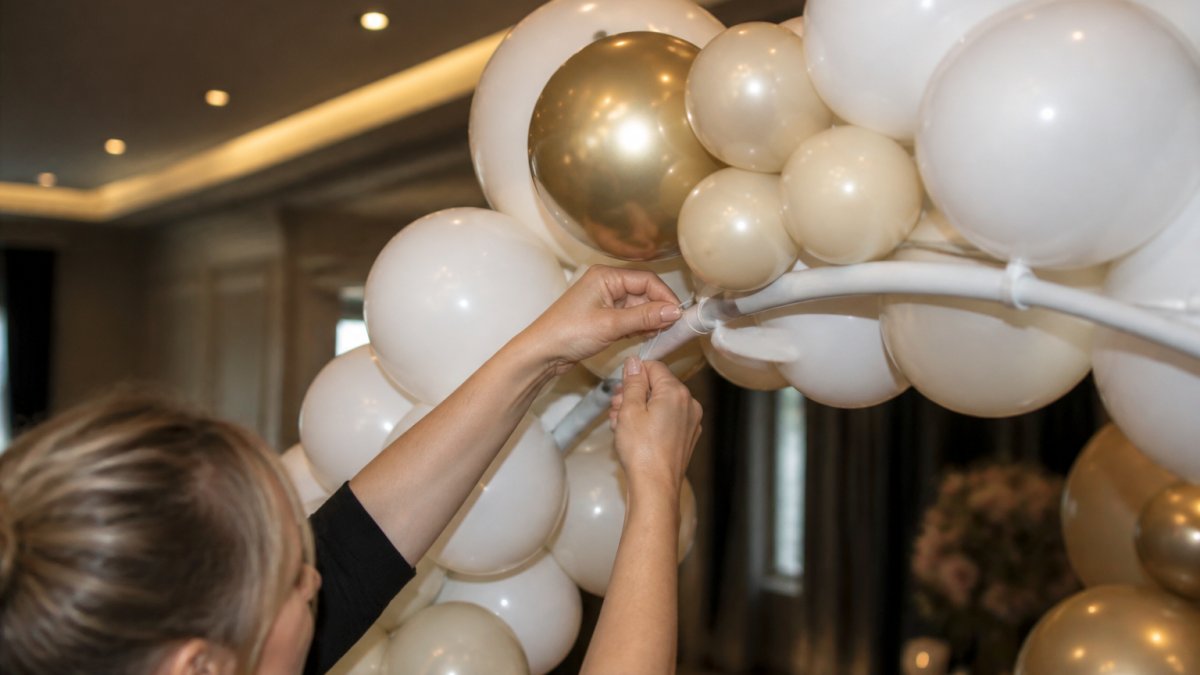
How you install your arch affects how long it lasts. Balloons secured tightly to a frame with proper spacing last longer than loosely arranged ones. Tight arrangements reduce rubbing and friction between balloons, which prevents small tears.
Proper inflation level matters too. Overinflated balloons rupture more easily and deflate faster. Underinflated balloons look droopy and are more prone to damage from handling.
Position your arch away from heat sources, direct sunlight, and air conditioning vents. Each of these accelerates deflation. If you're setting up indoors, find a spot that's temperature-stable and away from windows if possible.
For outdoor arches, set up in the shadiest location available. If shade isn't possible, consider a pop-up tent or canopy to protect your arch from direct sun. This single step can extend an outdoor arch's lifespan by several days.
Planning your balloon arch timeline for event day
Start your planning by deciding: air-filled or helium? This choice drives everything else.
For a single-day event, either works. Air-filled gives you flexibility to set up 1-2 days early.
For a multi-day celebration, air-filled is the practical choice. It stays firm for 2-3 weeks, giving you plenty of buffer time.
Next, consider your venue. Indoor events allow earlier setup and longer arch lifespan. Outdoor events require later inflation and more careful protection from weather.
Finally, think about appearance standards. Learn how delivery and setup logistics coordinate with your balloon arch inflation timeline. If photo-perfect matters, inflate closer to event start time.
Understanding latex balloon properties and longevity provides technical guidance on balloon materials. Event planning timeline best practices covers coordination strategies for multi-element celebrations.
When you're coordinating your balloon arch with other event elements, especially light-up displays that need their own setup time, timing becomes critical.
The key is communication.
Frequently Asked Questions
How long does a balloon arch last if it's indoors?
Indoor balloon arches typically last 2-3 weeks if air-filled, or 3-5 weeks if helium-filled, assuming stable temperature and no direct sunlight. Indoor conditions protect balloons from UV exposure and weather, which are the primary causes of deflation and fading. Air conditioning and consistent humidity help maintain balloon firmness. For event displays that stay up several days after your celebration, indoor placement is far more reliable than outdoor exposure.
Can I inflate a balloon arch the day before my event?
Yes, you can inflate a balloon arch up to 24 hours before your event if it's indoors and air-filled. Helium-filled arches lose approximately 5-10% of their lift per day due to helium permeation through the latex, so same-day inflation is better for helium. Air-filled balloons hold their shape much longer indoors. If your event is outdoors or in a warm venue, inflate as close to event time as possible to avoid heat-related deflation and ensure maximum visual impact.
What is the difference between a balloon arch and a balloon garland in terms of lifespan?
Both structures experience similar deflation rates based on inflation type and environment. For durability, both benefit equally from quality balloons, sealants, and indoor placement.
How do temperature and sunlight affect how long a balloon arch lasts?
Heat accelerates balloon deflation by expanding the air inside and increasing helium permeation through the latex. Direct sunlight causes UV damage, fading the balloon colour and weakening the material, which can lead to micro-tears and faster deflation. Balloons in direct sun can lose firmness within 12 hours, while shaded indoor arches remain inflated for days or weeks. Outdoor arches in cold weather last longer because cold slows gas escape, but freezing temperatures can make latex brittle. Keep outdoor arches in shade and away from heat sources whenever possible.
Your balloon arch is only one part of creating a memorable celebration. When you pair it with a stunning focal point like a custom light-up number display, you create the show-stopping photo opportunity your guests will remember. Essex Light Up Numbers specializes in combining beautiful balloon arches with illuminated displays that add elegance and sparkle to milestone celebrations. Contact us to explore how we can bring your event vision to life with both elements working together perfectly.